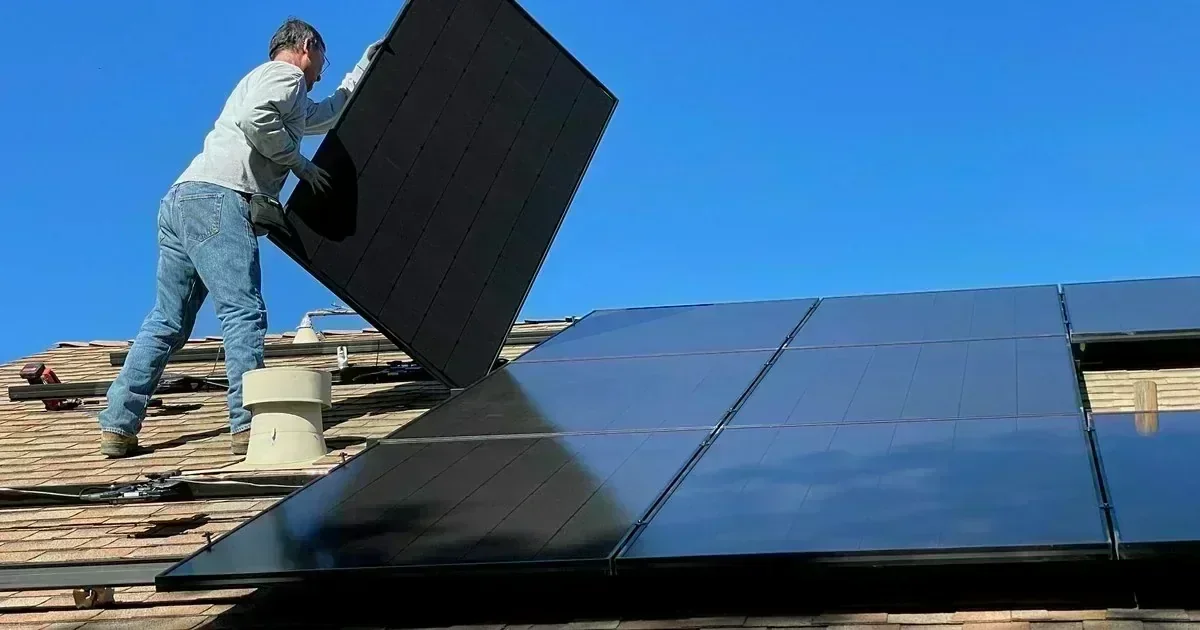
With dozens of solar panel brands now available in the Philippine market, from established international manufacturers to lesser-known imports, choosing a reliable supplier can feel overwhelming. Browse vetted options in our solar product catalog, then use this practical checklist to evaluate before you buy.
Best Solar Panel Brands in the Philippines: What Actually Matters
Searching for the best solar panel brands in the Philippines is useful, but a brand ranking alone cannot tell you what will work on your roof. Compare the exact model, efficiency, dimensions, temperature coefficient, warranty, mechanical rating, supplier support and compatibility with the proposed inverter.
- Verify the exact model against the current manufacturer datasheet.
- Compare watts per square meter, not just headline wattage.
- Check warranty handling and who will process a Philippine claim.
- Check electrical fit: Voc, Vmp, Isc and Imp must fit the string/MPPT design.
- Check the whole quotation: a cheap panel can become expensive when installation and system compatibility are poor.
A 650W module is not automatically a better purchase than a 550W module if it consumes more roof space, costs much more, or produces a worse string configuration. Buy the system fit, not the biggest number on the label.
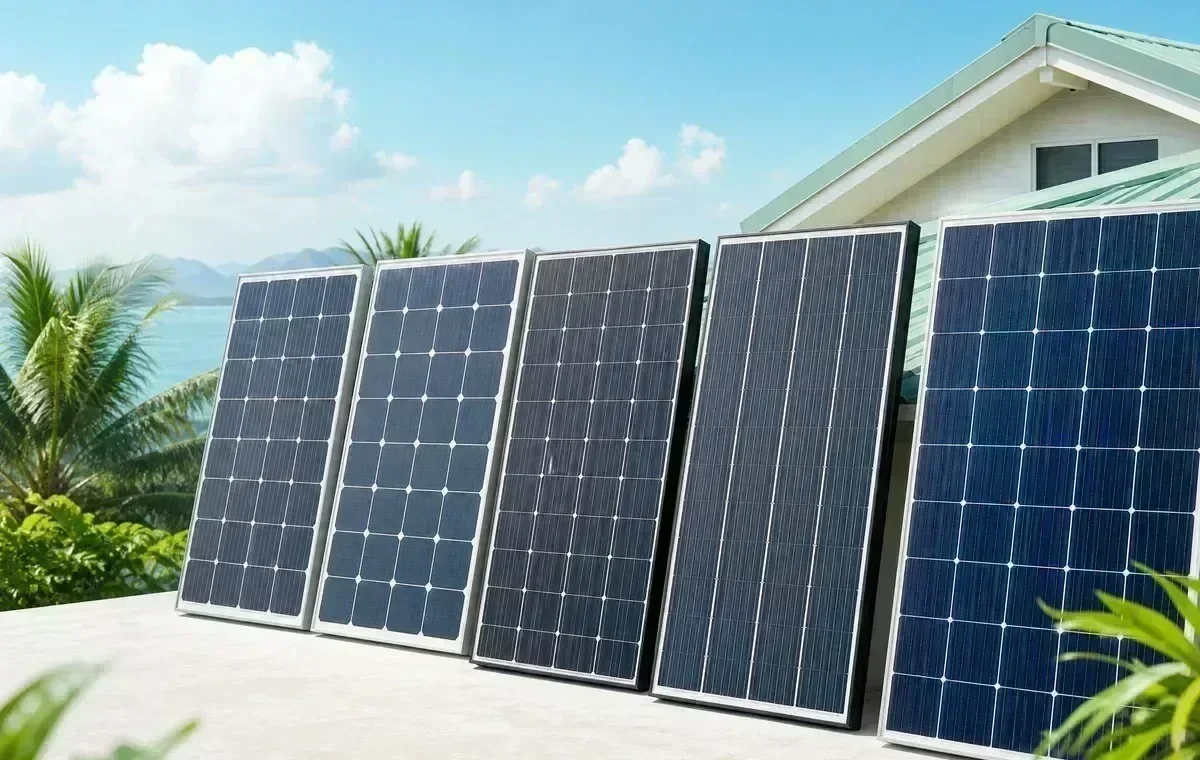
1. Check the Warranty Terms Carefully
Reputable panel manufacturers typically offer a 10 to 15-year product warranty alongside a 25 to 30-year linear power output warranty. Be wary of unusually short warranties or brands that can't clearly explain their warranty claim process in the Philippines. For a personalized system check, use the CalcSolarPH solar calculator.
2. Look for Tier-1 Manufacturer Status
"Tier-1" is a financial classification (not a quality certification) indicating a manufacturer has a strong balance sheet and has supplied panels to large-scale utility projects for several consecutive years. It's a useful, though not definitive, signal of manufacturing stability.
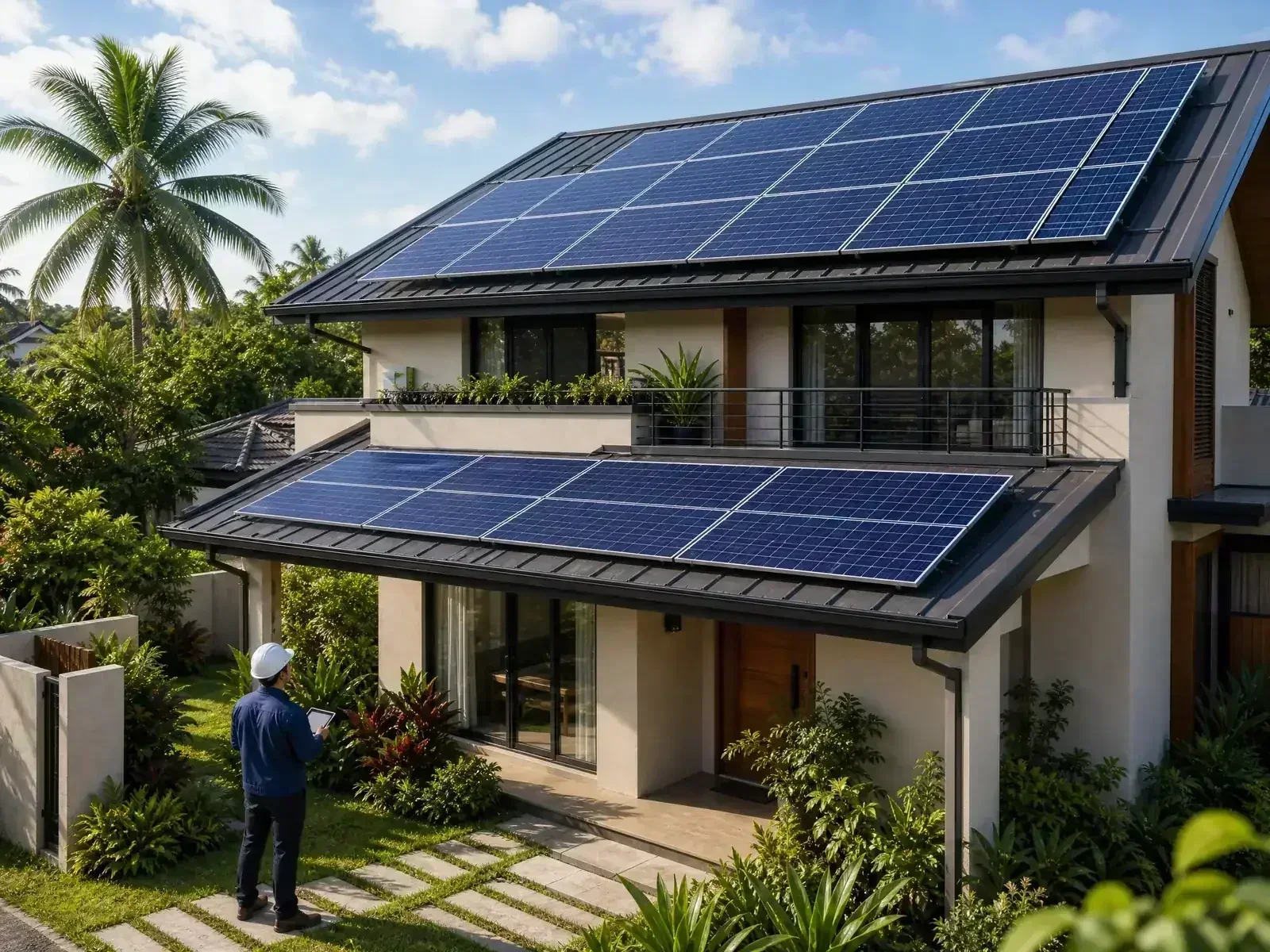
3. Verify Local After-Sales Support
A panel is only as good as the support behind it. Confirm whether your supplier or installer has a local service center, replacement parts inventory, and a track record of honoring warranty claims within the Philippines rather than requiring shipment abroad. Also consider durability under our storm season. Our typhoon-proofing guide explains which mounting and panel qualities matter most.
4. Compare Efficiency and Temperature Coefficient
Higher efficiency panels produce more power per square meter, useful for limited roof space. Just as important in our climate is the temperature coefficient, which measures how much output drops as panel temperature rises; a lower (less negative) coefficient performs better under tropical heat.
5. Read Independent Installer Reviews
Beyond spec sheets, ask local installers which brands they've had the fewest field issues with. Installers who work with multiple brands daily often have the most honest, real-world reliability insight. Once you've shortlisted a brand, size your inverter and panel array to match your actual bill. For the next planning step, see solar inverter buying guide.
How to Compare Solar Panel Brands in the Philippines
The best solar panel is not automatically the panel with the highest nameplate wattage. Compare the product warranty, performance warranty, temperature coefficient, degradation rate, mechanical load rating, cell technology, and the installer’s ability to support warranty claims in the Philippines. A slightly more efficient panel may be useful when roof space is limited, while a lower-cost panel can still be practical when the roof has plenty of usable area and the rest of the system is well designed. For the next planning step, see solar panel buying guide.
Monofacial, bifacial, and flexible panels
Monofacial panels produce power mainly from the front surface and are often the simplest choice for a typical opaque roof. Bifacial panels can collect light from the rear side, but their real-world advantage depends on roof reflectivity, mounting height, row spacing, and shading. Flexible panels are useful for selected lightweight or curved applications, but they require especially careful attention to heat management, attachment, and serviceability. Ask for a production estimate based on the actual roof rather than assuming a laboratory rating will be delivered every day.
A Practical Buying Checklist
Before buying, request the exact model number, datasheet, warranty terms, serial-number process, and expected annual production. Check that the panel voltage and current are compatible with the inverter’s MPPT operating range. Confirm the proposed layout accounts for morning and afternoon shade, roof access, drainage, and future maintenance. For homes near the coast or exposed to severe weather, ask the installer how the mounting system and fasteners are protected against corrosion and wind uplift. For the next planning step, see 5kW vs 8kW vs 10kW inverter guide.
The Better Question: Which Panel Is Right for Your Roof?
A homeowner does not really need the “best” panel on paper. You need a panel that fits the roof, the inverter, the budget, and the warranty path available in the Philippines. A 600W module that is too large for the usable roof area, poorly matched to the MPPT, or difficult to replace locally can be a worse purchase than a slightly lower-wattage module with a better system fit.
| Check this | Why it matters |
|---|---|
| Exact model number | “Jinko” or “Trina” is not enough. The electrical and physical specifications vary by model. |
| Wattage and dimensions | Higher wattage can reduce panel count, but larger modules may not fit every roof layout. |
| Voc, Vmp, Isc and Imp | These determine whether the proposed string and MPPT design is electrically compatible. |
| Warranty route | A long warranty is only useful if the seller/distributor can process a claim years later. |
| Price per usable watt | Compare the whole system, not just the price printed beside one panel. |
If two proposals use reputable modules with similar specifications, stop obsessing over the logo. Put the difference into better mounting hardware, protection, installation quality, monitoring, or a correctly sized inverter. Those choices can matter more to the homeowner's actual outcome.
How Many Panels Will You Actually Need?
Panel count starts with the required PV capacity, not with the brand. For example, a nominal 5kW array could use about nine 550W panels (4.95kW), eight 600W panels (4.8kW), or eight 650W panels (5.2kW). The final choice must still fit the roof and the inverter's voltage/current limits. Use the CalcSolarPH calculator before shopping so you are comparing equipment against a system requirement instead of guessing from panel wattage.
Frequently Asked Questions
Is a higher-wattage panel always better?
Not always. Higher-wattage modules can reduce the number of panels and simplify roof planning, but the final result depends on dimensions, roof layout, shade, inverter compatibility, price, and warranty support.
Should I choose a panel based only on brand popularity?
No. Brand reputation helps, but the model-specific datasheet, installer quality, warranty process, and system design are equally important. Compare complete proposals rather than logos alone. For the next planning step, see solar package quotation guide.
How to compare panel brands without relying on the logo
Brand reputation matters, but a panel should be evaluated as part of the whole system. Compare the exact model, not merely the manufacturer name. A higher-wattage module may also be physically larger, and electrical characteristics must fit the inverter or MPPT operating window.
- Compare module efficiency, dimensions, voltage/current characteristics, and temperature coefficients.
- Check the product's warranty structure and who will actually handle a claim in the Philippines.
- Consider roof dimensions and mounting layout; the highest wattage per panel is not automatically the best fit for every roof.
- Compare the installed system price per usable watt or expected production, not only the panel's sticker price.
For a buying decision, combine this brand comparison with the site's solar panel buying guide and your calculated system requirement.