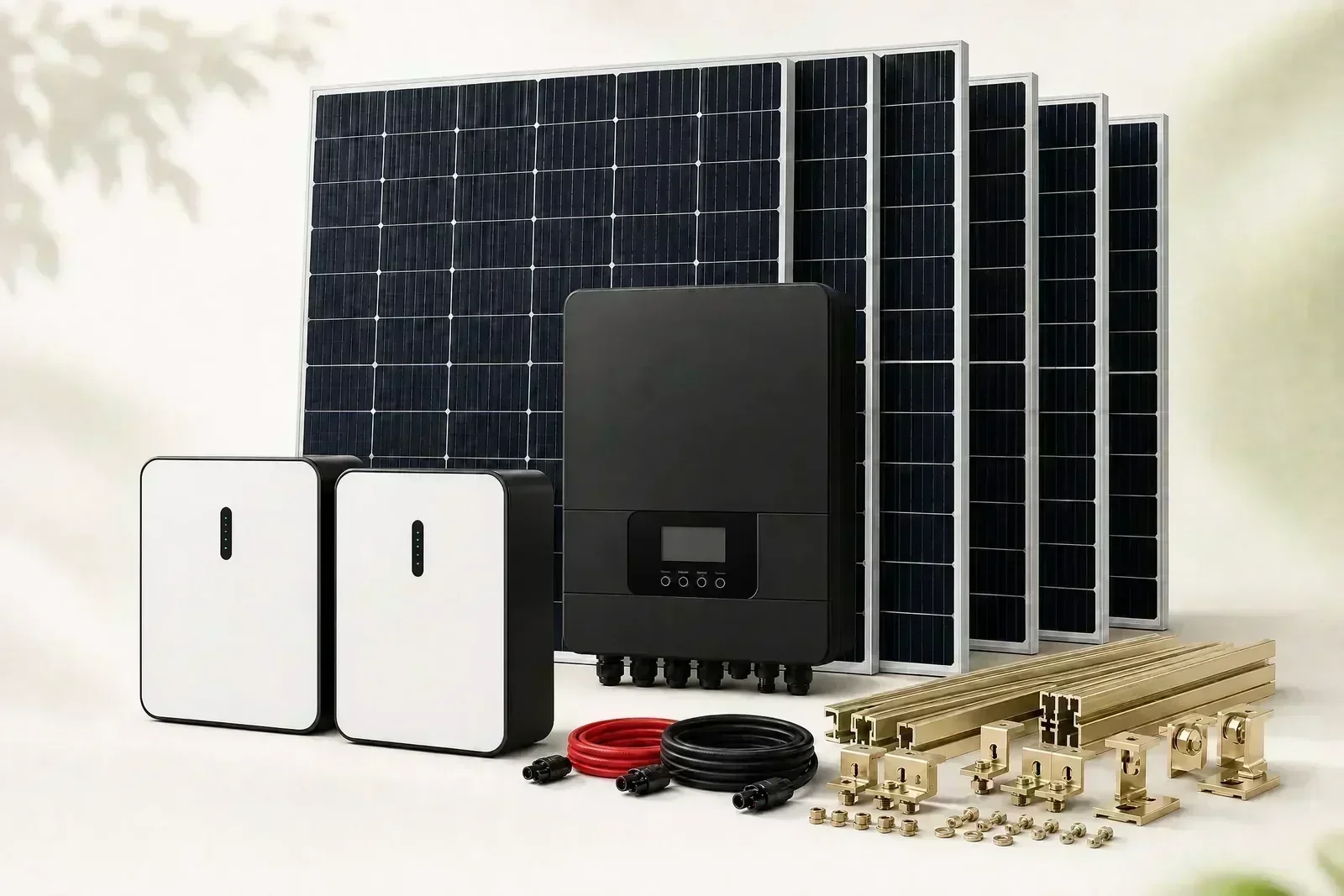
A complete solar package can simplify comparison, but package labels may hide different assumptions. Before buying, compare the included equipment, system operating mode, backup circuits, battery usable capacity, installation scope, and exclusions line by line.
Solar Package Philippines: The Cheapest Quote Can Hide the Most
Two solar packages in the Philippines can both say “5kW” while delivering very different results. Compare the written scope, not the headline capacity.
Demand exact model numbers for panels, inverter and battery; total PV capacity; usable battery kWh; mounting; cable sizes; breakers; surge protection; grounding; monitoring; backup circuits; permits; testing; commissioning; warranty handling; and exclusions. If an item is not written down, treat it as unconfirmed.
The real buying question is not “Which package is cheapest?” It is “Which quotation gives me the required system behavior and complete installed scope for the money?”
Identify the system type and target
Ask whether the package is grid-tied, hybrid, off-grid, or backup-only. Confirm the target loads, expected runtime, PV capacity, inverter output, battery capacity, and whether the package is for a home, farm, or commercial site. For the next planning step, see 5kW vs 8kW vs 10kW inverter guide. For a personalized system check, use the CalcSolarPH solar calculator.
Check every included component
A package should identify panels, inverter, battery, mounting, cables, breakers, surge protection, monitoring, transfer equipment, labels, installation, testing, commissioning, and handover documents. “Complete” should be defined in writing. For the next planning step, see solar panel brands guide.
Compare price ranges carefully
A package price is not directly comparable when one quotation excludes roof work, delivery, permits, main-panel upgrades, long cable runs, structural repairs, or after-sales service. Request a written list of inclusions and exclusions before comparing totals.
Match package size to actual use
Use the calculator as a planning aid, then compare it with actual load timing, roof conditions, backup priorities, and installer design. A package should not be selected just because its headline kW rating is larger.
Buyer checklist before ordering
- Confirm system type, PV size, inverter rating, and usable battery energy.
- Ask for exact product models and current datasheets.
- Verify installation, protection, commissioning, monitoring, permits, and handover scope.
- Compare exclusions, warranty handling, delivery, seller identity, and service.
- Ask what happens if the site survey finds shading, roof problems, or electrical limits.
What a complete solar package should include
A ready-made package can make shopping easier, but the word “complete” is not a technical specification. One seller may include panels, inverter, battery, mounting, cables, and protection; another may exclude delivery, roof work, permits, main-panel changes, monitoring, or commissioning. Compare the written scope line by line before comparing the headline price. For the next planning step, see solar panel buying guide.
| Package area | Questions to ask | Common omission |
|---|---|---|
| Hardware | What are the exact panel, inverter, battery, and protection models? | A package name without model numbers or datasheets. |
| Installation | Are survey, mounting, cable routes, roof sealing, testing, and commissioning included? | Labor, structural repair, long cable runs, or main-panel work. |
| Backup design | Which circuits are backed up and what runtime assumption is used? | Whole-house wording when only selected loads are supported. |
| After-sales | Who handles warranty, monitoring, service visits, and replacement? | Seller identity, claim procedure, or local support. |
How to compare package sizes without misleading matches
Use the calculator and your actual load schedule as planning inputs, then compare the result with the package’s inverter output, PV capacity, usable battery energy, and backup circuits. A 3kW package, 5kW package, or 10kW package is not automatically correct because the buyer’s monthly bill falls within a broad price or consumption range. For the next planning step, see solar inverter buying guide.
For a concrete starting point, review the 1–2kW Hybrid Starter Kit, the 5–6kW Residential Solar Package, and the 10–11kW Small Commercial Package. Treat these as catalog references and confirm current contents, price, stock, and installation scope before purchase.
Package versus buying components separately
A package can reduce procurement work and make one seller responsible for coordination. Buying components separately may provide more choice but places more responsibility on the buyer to confirm electrical compatibility, warranty boundaries, delivery timing, and commissioning. Neither route is automatically cheaper; the correct comparison is the total delivered and commissioned system.
Questions to send before requesting a final quotation
Send the recent bills, essential-load list, target backup hours, roof photos and dimensions, grid availability, preferred operating mode, and any future expansion plan. Ask the seller to return exact model numbers, a one-line diagram, inclusions and exclusions, warranty terms, commissioning tests, payment milestones, and the process if a site survey changes the design.
Buyer decision summary
Choose the package with the clearest hardware list, realistic load and runtime assumptions, transparent installation scope, compatible components, and practical after-sales support. A lower headline price is not better if it excludes the work or protection needed to make the system safe and usable.
How to Catch a Bad Solar Quote in 10 Minutes
- Ask for the exact panel, inverter and battery model numbers.
- Check the total PV kWp, not just the number of panels.
- Check the inverter's continuous output and MPPT limits.
- Ask whether the battery capacity is nominal or usable.
- Ask what protection devices are included on both DC and AC sides.
- Check whether mounting hardware, wiring and labor are included.
- Ask who handles manufacturer and workmanship warranties.
- Ask for the expected annual energy production and the assumptions behind it.
- Ask whether net-metering or zero-export requirements are included if relevant.
- Compare the quote by system scope and expected outcome, not by the lowest headline price.
Red flag: if two installers quote “5kW solar” but one includes 5.5kWp of panels, a 5kW inverter, 10kWh of batteries, protections and installation while the other includes only 5kWp of panels and a bare inverter, those are not comparable products.
Compare Quotes by What You Get, Not What the Seller Calls Them
A “5kW package” is not a standardized product. One seller may mean 5kW of panels; another may mean a 5kW inverter; another may advertise a 5kW hybrid system with a battery. Always translate the marketing label into actual equipment, capacity, protections, installation scope and expected performance.
If you already know your monthly bill and major loads, run the numbers through the CalcSolarPH solar calculator before requesting quotes. A quote is much easier to challenge when you know what the system should be designed to accomplish.
Frequently Asked Questions
Is a complete package always cheaper?
Not necessarily. It may simplify procurement, but compare the total delivered scope and the quality and compatibility of every component.
What should I do before requesting a quote?
Prepare recent bills, critical loads, backup-runtime target, roof photos and dimensions, grid availability, and your preferred operating mode.
What does complete package mean?
It should be defined in writing. Confirm hardware models, delivery, mounting, protection, installation, commissioning, monitoring, permits, warranty handling, and exclusions instead of relying on the package label.
Sources & Further Reading
Use these references to verify technical context. Product specifications, prices, utility requirements, and availability can change, so check the current source and the exact seller listing before making a purchase decision.
- U.S. Department of Energy: Solar Photovoltaic System Design Basics
- U.S. Department of Energy: Energy Storage
- NREL PVWatts: photovoltaic production planning tool
This article is for planning and comparison only. Final electrical design, installation, commissioning, and utility compliance require qualified professional review.
A solar quotation is a scope of work, not just a price
Two quotations can have the same panel wattage and very different value because the included inverter, battery, protection, mounting, wiring, monitoring, permits, labor, warranty support, and commissioning scope may differ.
| Check | Question to ask |
|---|---|
| Equipment | Are exact model numbers and quantities listed? |
| Electrical protection | Are the required disconnects, breakers, fuses, SPDs, grounding, and enclosures included? |
| Installation | What mounting method, cable sizes, routing, labor, and roof work are included? |
| Utility work | Who handles the utility application, testing, and required documentation? |
| Warranty | Who is the actual contact if a component fails after installation? |
Before comparing prices, put every quotation into the same scope. Then compare expected production, usable battery capacity, inverter capability, warranty coverage, and total installed cost.