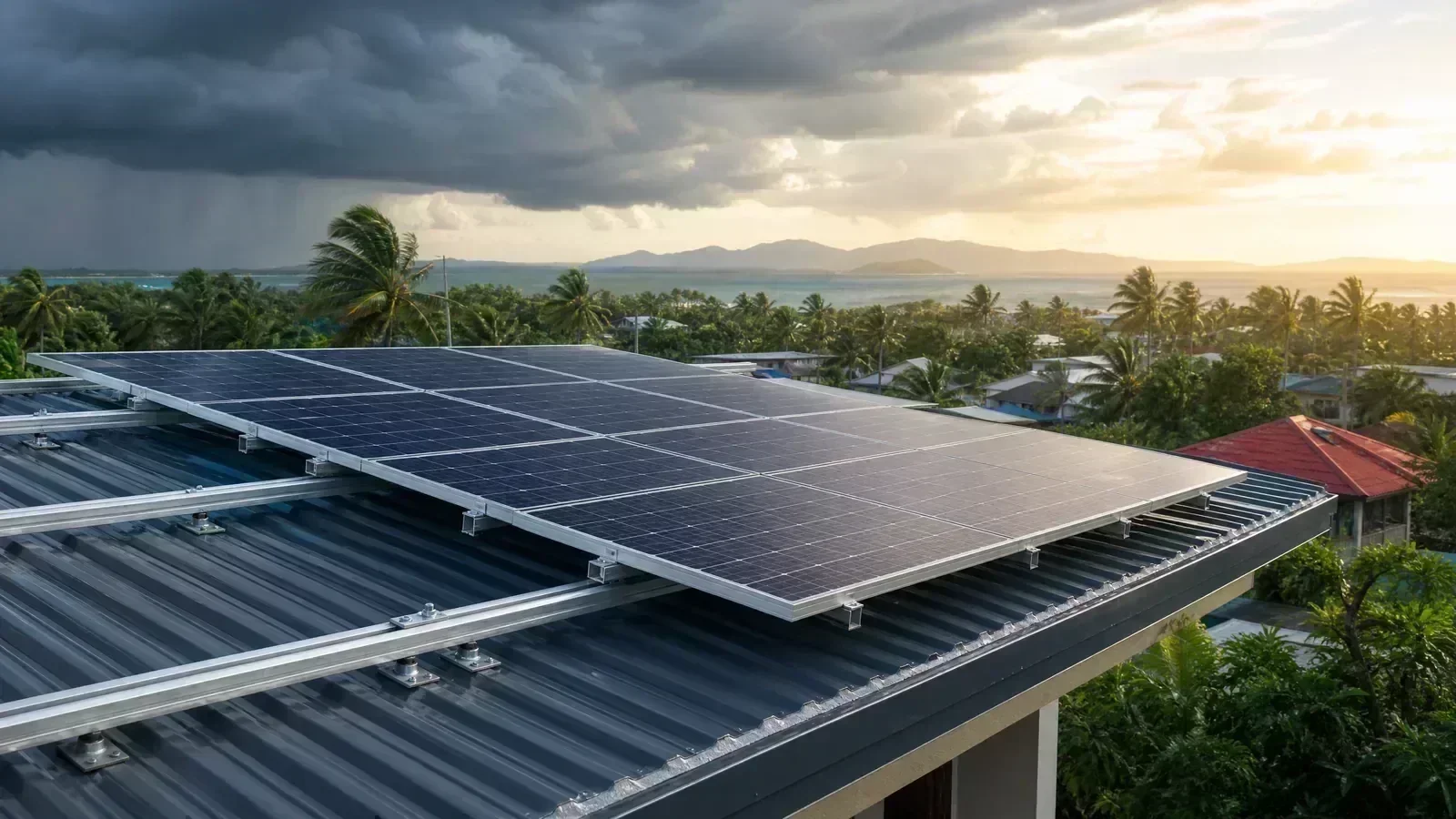
The Philippines experiences an average of 20 typhoons per year, making structural resilience one of the most important, and most often overlooked, considerations when installing rooftop solar. A properly engineered mounting system can be the difference between weathering a storm safely and losing your entire investment. For the next planning step, see solar wiring architecture guide.
1. Choose Wind-Rated Mounting Rails
Not all mounting rail systems are rated the same. Look for aluminum racking systems with documented wind-load ratings suitable for PAGASA's signal category winds in your region, especially if you're in a coastal or high-exposure area. For the next planning step, see solar backfeed and transfer-switch safety guide. For a personalized system check, use the CalcSolarPH solar calculator.
2. Use the Correct Roof Attachment Method
Roof hooks, brackets, and flashing must be matched to your specific roofing material (corrugated metal, tile, or concrete) and properly sealed to prevent both water leaks and hardware pull-out during high winds. For the next planning step, see live DC measurement safety guide.
3. Mind Panel Tilt Angle and Edge Exposure
Panels mounted with excessive tilt or positioned at unprotected roof edges experience significantly higher uplift forces during strong winds. Installers should follow local wind-load engineering guidance rather than a one-size-fits-all tilt angle.
4. Secure Cabling and Combiner Boxes
Loose or exposed DC cabling can whip around and suffer insulation damage during storms. Route cables through conduit where possible and ensure combiner boxes and junction points are firmly fastened and weatherproofed.
5. Have a Pre-Typhoon Inspection Routine
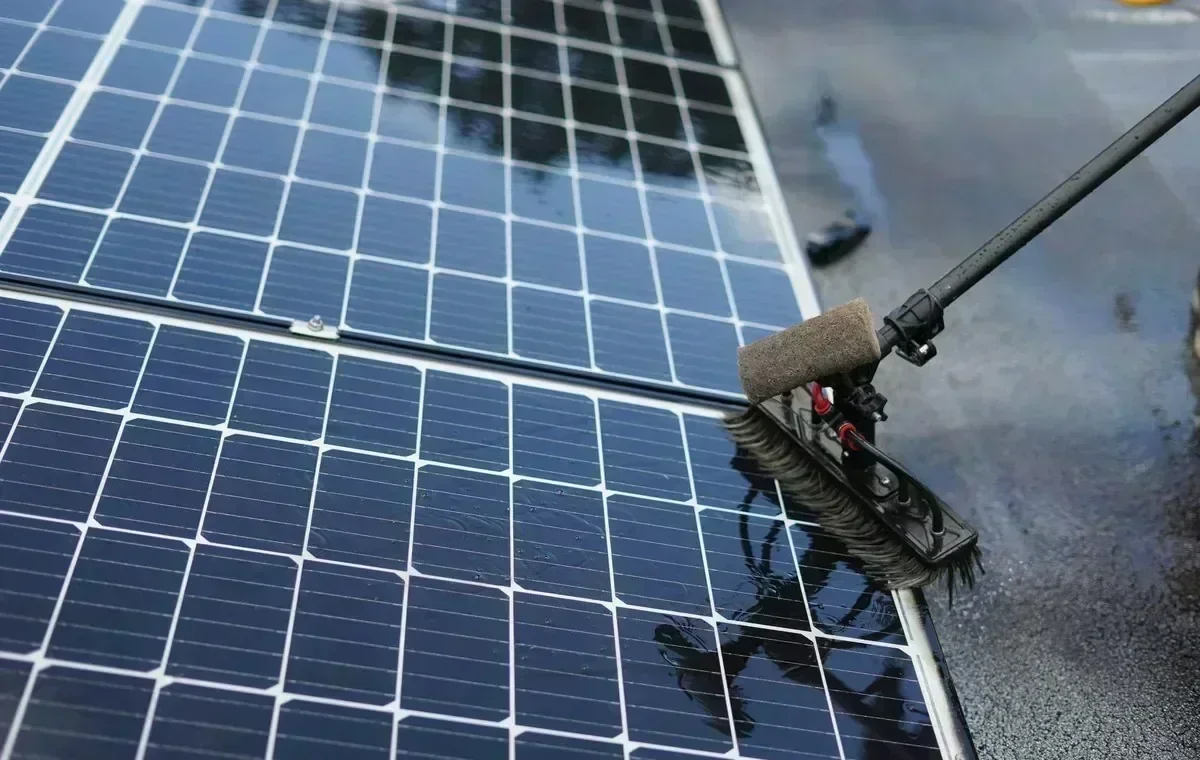
Before typhoon season peaks (typically June through November), have a professional inspect bolt tightness, rail corrosion, and roof attachment integrity. A short annual inspection is far cheaper than replacing storm-damaged panels. Pair this with the regular cleaning and monitoring routine so your system is in top shape before every storm.
Wind-Resistant Solar Installation Starts With the Roof
A typhoon-ready solar system is only as strong as the roof, attachments, rails, fasteners, and waterproofing beneath it. Before installation, inspect the roof structure, identify corrosion or rot, confirm the attachment method, and avoid placing modules where edge exposure and uplift forces are greatest unless the design specifically accounts for them.
Use a documented mounting design
Ask the installer to explain the rail layout, attachment spacing, fastener material, wind assumptions, torque process, cable restraint, and waterproofing method. Do not assume that more clamps automatically make an installation safer; the roof structure and approved mounting instructions must work together.
Protect Cabling, Connectors, and Equipment
Solar cables should be supported and protected from abrasion, standing water, sharp edges, animals, and wind movement. Connectors should be compatible, fully engaged, and kept out of pooling water. Combiner boxes, inverters, and batteries need appropriate enclosure ratings, clearances, and protection from direct storm exposure. After a severe storm, inspect from a safe position and call a qualified technician if anything is displaced or damaged.
Frequently Asked Questions
Should solar panels be removed before every typhoon?
Usually no. A properly designed permanent system should be engineered and installed for the site’s expected conditions. Removal can create its own damage and should only be considered when the mounting system or manufacturer specifically requires it.
What should I do if a panel is cracked after a storm?
Keep people away, avoid touching the panel or cables, and contact a qualified solar technician. A damaged module may still generate voltage in daylight, even when the inverter is off. For the next planning step, see solar cable sizing and voltage-drop guide.
Before a typhoon: what to document and inspect
The goal is not to make a roof installation "typhoon-proof" through a marketing label. The practical goal is to have a properly engineered mounting system, sound roof attachment, appropriate fasteners, protected cable routing, and documented inspection and maintenance.
- Keep the structural and mounting documentation supplied for the installation.
- Record clear photos of the array, cable routes, inverter, isolators, and visible mounting areas while conditions are normal.
- After a severe storm, inspect from a safe location first. Do not climb onto a wet or damaged roof to investigate.
- If a panel, cable, connector, or mounting component appears damaged, isolate the system according to the documented procedure and call a qualified professional.