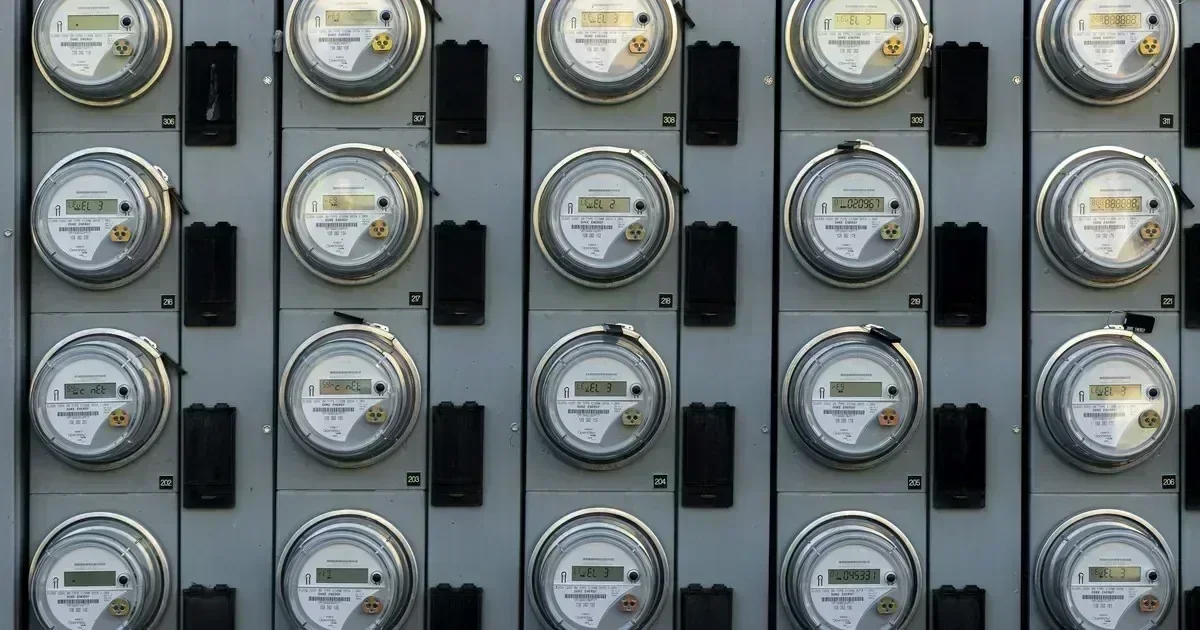
If your home is connected to the grid and you install a grid-tied or hybrid solar system, you may be eligible to participate in the Philippines' net metering program. Net metering allows you to export excess solar energy back to your utility's distribution grid in exchange for a bill credit, effectively letting your electric meter "run backward." For the next planning step, see solar permits and utility handoff guide.
How Net Metering Works
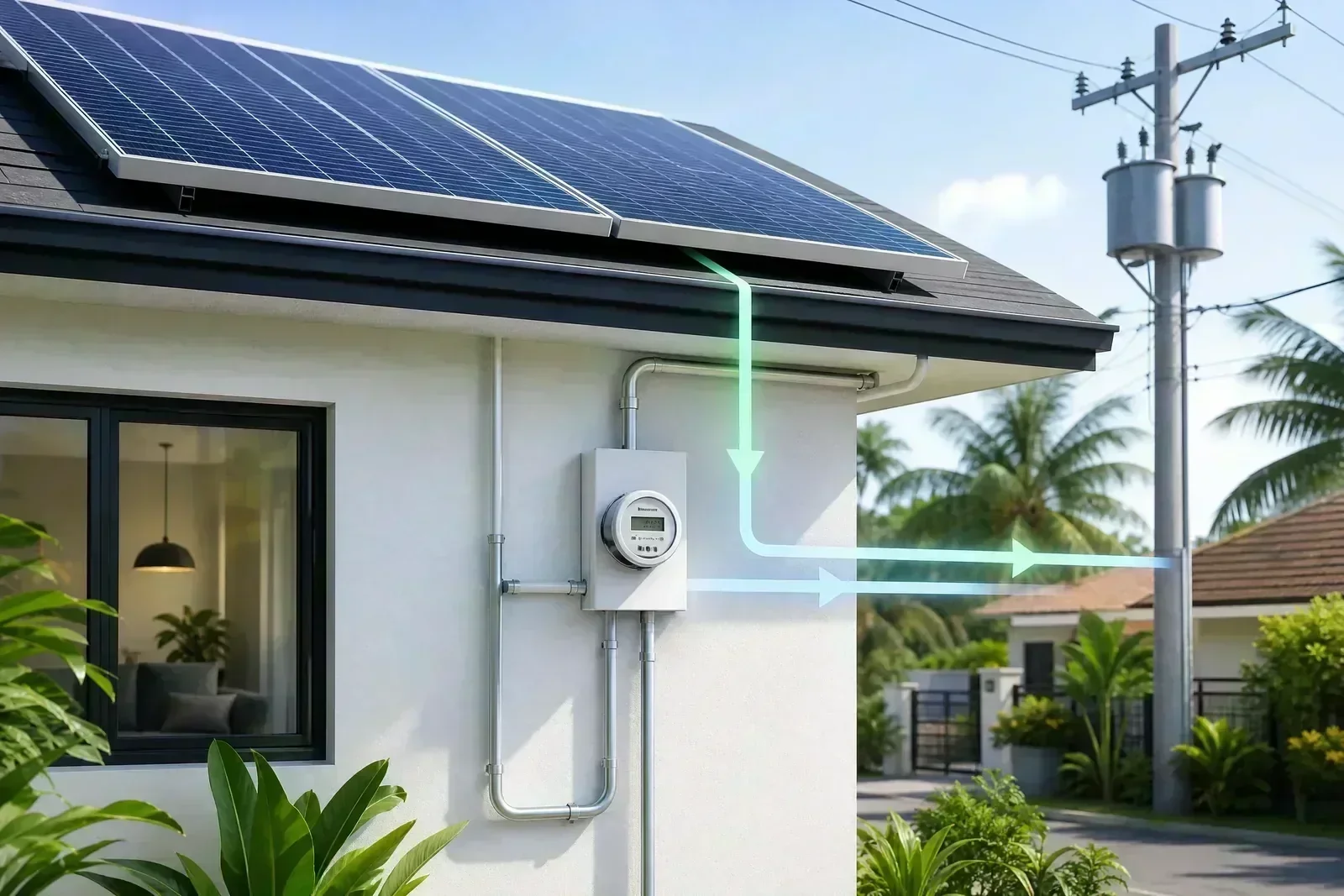
During the day, your solar panels often generate more electricity than your household consumes. Instead of that excess energy going to waste, a bi-directional meter measures the surplus power exported to the grid. Your utility then applies a peso credit to your next bill, based on their approved net metering rate. For a personalized system check, use the CalcSolarPH solar calculator.
Eligibility and Requirements
- Your system generally needs to be sized at 100 kW or below to qualify under the standard residential net metering rules.
- You must apply through your local electricity provider or distribution utility and have your installation inspected and approved.
- A certified solar installer typically handles the bi-directional meter installation and utility documentation on your behalf.
Net Metering vs. Battery Storage
Net metering is most valuable for grid-tied systems without batteries, since it gives you a way to monetize excess daytime production. Homes with hybrid battery systems may choose to prioritize charging batteries first before exporting any remaining surplus, maximizing self-consumption and backup readiness at the same time. For the next planning step, see off-grid vs hybrid vs grid-tied guide.
Is It Worth Applying?
For most households with south or west-facing rooftops and consistent daytime sun exposure, net metering meaningfully shortens the payback period of a solar investment. It's worth checking with your local utility about current credit rates and application requirements before your installation begins. Curious if your home qualifies first? Use our free solar calculator to size a system under the 100kW cap.
Frequently Asked Questions
How do I apply for net metering with Meralco?
Submit a signed request letter, the Net-Metering Application form, and the pro-forma Interconnection Agreement through your distribution utility (e.g., Meralco). A PEE-certified installer usually handles the bi-directional meter and paperwork; approval and meter replacement can take several months.
How much credit do you get for exported solar energy?
Your utility applies a peso credit based on their approved net metering rate, which is typically lower than the retail rate per kWh. This is why maximizing self-consumption with battery storage often makes financial sense alongside net metering.
What is the maximum system size for net metering in the Philippines?
Under RA 9513 (Renewable Energy Act of 2008), residential solar systems up to 100 kW can participate in the net metering program with your local distribution utility or electric cooperative.
How Net Metering Works in Practice
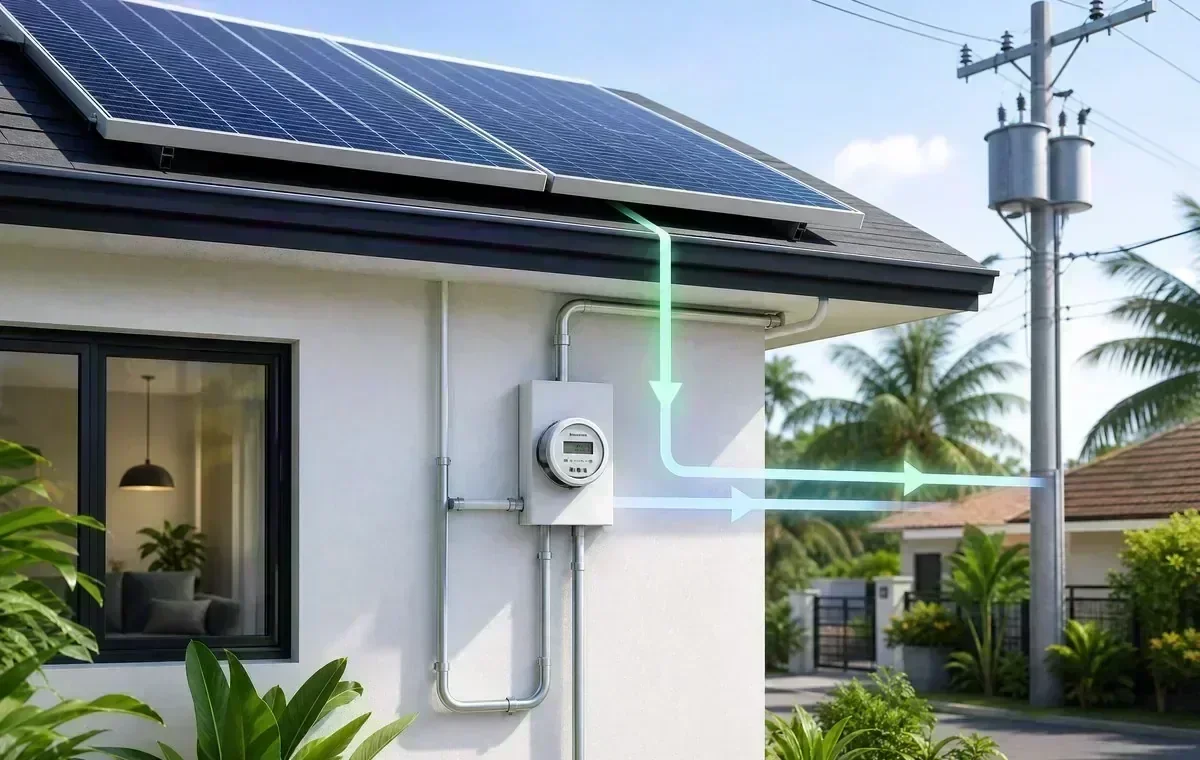
A grid-connected solar system first supplies electricity to the home. If production exceeds the home’s instantaneous demand, the excess can flow to the distribution grid through an approved interconnection. When the home needs more electricity than the panels are producing, power is imported from the grid. A bi-directional meter records both directions. The export value is credited according to the utility’s approved rules, so exported energy should not automatically be valued at the same rate as retail electricity.
Meralco Application Checklist
Meralco’s current application guidance lists an application form, documentary requirements, a Certification of Final Electrical Inspection from the LGU, an amended Net-Metering Agreement, applicable fees, technical evaluation, inspection, testing, commissioning, and meter work. Requirements can change, so applicants should use the utility’s current checklist rather than an old installer quotation. If multiple equipment models are used, an annex sheet may be required. Meralco explains the current application process here. For the next planning step, see solar-ready home planning guide.
Self-Consumption Before Export
Because exported energy may receive a different credit value from the retail rate, shifting flexible daytime loads can improve the value of solar production. Consider scheduling laundry, water pumping, charging, and other suitable loads during sunny hours. A battery may increase self-consumption and provide backup, but it also adds cost, conversion losses, maintenance, and replacement considerations.
Frequently Asked Questions
Does installing solar automatically activate net metering?
No. The system must be properly designed, documented, inspected, approved, tested, and commissioned under the applicable distribution-utility process.
Can I use a battery with a net-metered system?
Yes, if the inverter, battery, protection equipment, and interconnection design are compatible and approved where required. Ask the installer to explain how the battery behaves during a grid outage and how export control is handled.
Meralco Net-Metering: Separate Import, Self-Consumption, and Export
A solar bill calculation should distinguish three energy paths: solar used immediately by appliances, electricity imported from the grid, and excess solar exported under the utility’s approved process. Meralco describes net metering as a program under RA 9513 and explains that a bi-directional meter measures import and export. Do not represent exported kWh as if it automatically has the same peso value as avoided household consumption.
| Energy path | Planning question | Why it matters |
|---|---|---|
| Self-consumed solar | How much solar runs loads while the sun is available? | Usually the most direct energy-offset opportunity |
| Imported energy | How much does the home still draw from the grid? | Remains part of the bill after solar |
| Exported energy | Is the system registered and approved for export? | Credit treatment follows utility rules, not a generic retail-rate assumption |
Meralco’s current application page lists documents, LGU inspection requirements, technical evaluation, inspection, testing, and commissioning. Requirements can change, so link to the current utility page instead of hard-coding a permanent checklist.
Source and date note: This planning example uses an editable assumption, not a permanent Meralco tariff. Meralco’s official bill-breakdown page explains that residential bills combine generation, transmission, system loss, distribution, taxes, subsidies, and other regulated or pass-through charges. Verify the current bill and utility requirements before making a purchase or installation decision. See Meralco’s bill breakdown and Meralco’s solar and net-metering guidance.
ERC and Meralco Net-Metering Scope
Meralco’s current explainer says the net-metering program is for qualified end-users with renewable-energy facilities up to 100 kW, while installations above 100 kW fall outside that net-metering ceiling and may involve Zero Export or other Distributed Energy Resource arrangements. The ERC’s amended rules describe net metering as a way for an ordinary consumer to generate for own use and export excess under the applicable utility process. Treat the 100 kW figure as a scope checkpoint, not as permission to connect a system without utility review. For the next planning step, see 2026 net metering update.
| Project situation | Article-level guidance |
|---|---|
| Residential or small business system within the net-metering ceiling | Ask the distribution utility for the current application, meter, inspection, and commissioning requirements. |
| System above 100 kW | Do not label it ordinary net metering; discuss Zero Export/DER and interconnection requirements with the utility and qualified professionals. |
| PEZA ecozone or multi-consumer project | PEZA-zone arrangements may involve designated distribution utilities, zone administration, project registration, and commercial contracts; do not reuse a residential checklist. |
Verify current requirements through Meralco’s net-metering explainer, the ERC amended-rules announcement, and the applicable distribution utility. Rules and forms can change.