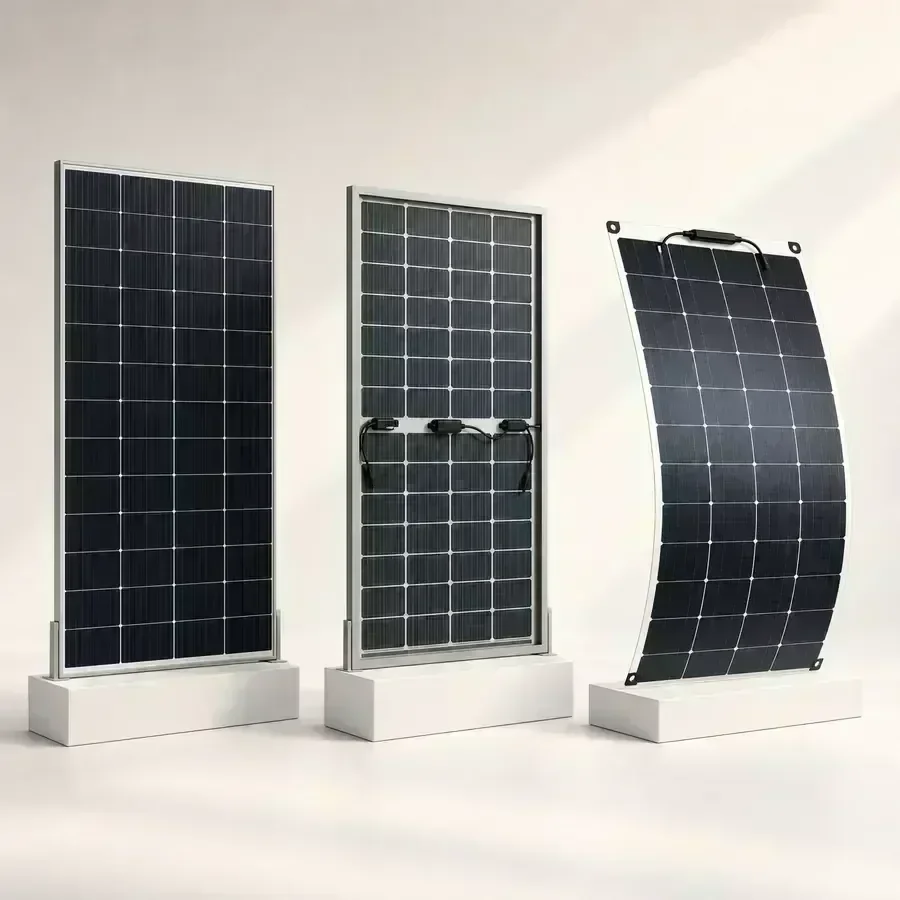
Solar panel shoppers usually compare brand and wattage first, but a good purchase decision also depends on roof space, shade, electrical compatibility, warranty handling, delivery, and the complete installed scope. Use the checklist below before requesting a quotation or opening a marketplace listing. For the next planning step, see solar package quotation guide.
Solar Panel Price Philippines: Compare Total Cost, Not One Module
People searching solar panel price Philippines often compare the price of one panel. That misses the real cost: panel count, mounting, shipping, wiring, protection, labor and inverter compatibility all affect the final system.
| Factor | Why it matters |
|---|---|
| Wattage + dimensions | Higher wattage may reduce module count but may require more roof area per module. |
| Efficiency | More important when usable roof area is limited. |
| Temperature coefficient | Relevant when estimating output in a hot Philippine environment. |
| Warranty + support | A long warranty is weak protection if the claim path is unclear. |
The right question is: Which panel gives the required production and system fit at a reasonable total installed cost?
Start with the exact model
Ask for the complete model number and current manufacturer datasheet. Do not treat a family name or a marketplace title as proof of the electrical rating. Confirm Voc, Vmp, Isc, Imp, dimensions, connector type, temperature coefficient, warranty terms, and certification details for the exact listing. For a personalized system check, use the CalcSolarPH solar calculator.
Compare wattage with roof conditions
A higher-wattage panel can reduce the number of modules needed for a target array, but it does not guarantee higher real-world production on a shaded, hot, poorly oriented, or space-limited roof. Compare the usable roof rectangles, walkways, setbacks, mounting method, and maintenance access before choosing a panel size. For the next planning step, see solar panel brands guide.
Compare the delivered cost
Panel price is only one part of the purchase. Ask whether delivery, mounting rails, clamps, cable, protection, engineering, installation, commissioning, permits, and after-sales support are included. Compare price per watt only after the same scope and assumptions are used.
Choose the right panel type
Monofacial panels mainly use the front surface and may be the simpler choice for an opaque roof. Bifacial modules may need suitable rear-side light conditions, spacing, mounting, and a design that supports the expected benefit. Ask the installer to state the shading and rear-reflection assumptions instead of assuming a fixed gain.
Buyer checklist before ordering
- Confirm the exact model and datasheet.
- Check Voc, Vmp, Isc, Imp, dimensions, connectors, and inverter MPPT compatibility.
- Ask for current price, stock, shipping, warranty, returns, and seller identity.
- Confirm mounting, cable, protection, installation, and commissioning scope.
- Compare the proposed panel layout with shade, roof condition, and maintenance access.
A practical solar-panel comparison for Philippine roofs
The best solar panel depends on the roof, the available area, the inverter’s operating window, the seller’s warranty process, and the total installed scope. A panel that looks attractive in a marketplace listing may still be a poor fit if its dimensions, voltage, connectors, or shading assumptions do not match the proposed design.
| Comparison factor | Why it matters | Buyer question |
|---|---|---|
| Wattage and dimensions | Higher wattage can reduce module count, but a larger panel may not fit every roof. | Will the exact model fit with walkways and maintenance access? |
| Electrical values | Voc, Vmp, Isc, and Imp determine string design and MPPT compatibility. | Has the installer checked cold-weather voltage and inverter limits? |
| Warranty and seller support | A written warranty is only useful if the seller can process a claim. | Who handles defects, transport, inspection, and replacement? |
| Delivered price | Shipping, mounting, protection, and labor can change the real cost. | Is this price for panels only or for the complete installed scope? |
Monofacial versus bifacial in a real Philippine installation
Monofacial modules are often the straightforward choice for an opaque roof because the design mainly depends on front-side irradiance. Bifacial modules can be useful when the rear side receives meaningful reflected or indirect light, but the result depends on clearance, roof or ground reflectivity, spacing, mounting height, and shading. Do not apply a fixed bifacial gain to every roof; request the installer’s assumptions and expected energy model.
For product-level research, compare the JA Solar / Longi monofacial option with the Jinko Tiger Neo bifacial option, then verify the exact current listing and datasheet before ordering.
How heat, shade, and typhoon exposure affect the decision
The Philippines has hot, humid, and storm-prone conditions. Temperature coefficients, secure mounting, cable management, drainage, corrosion resistance, and shade from nearby trees or buildings can matter more than a small difference in nameplate wattage. A quotation should explain the roof condition, attachment method, wind assumptions, cable routes, and access for cleaning and inspection.
How to compare price without choosing the wrong panel
Calculate price per watt only after confirming that the compared panels have similar warranty terms, delivery conditions, seller support, and installation scope. Keep the exact model number, seller identity, quotation date, stock status, and screenshots of the listing. Prices and availability change, so this record is a dated comparison aid rather than a permanent market quote.
Buyer decision summary
Choose the panel that fits the roof and inverter design, has a verifiable datasheet and warranty path, and remains sensible after delivery, mounting, protection, and labor are included. A slightly cheaper module is not a bargain if it creates layout compromises or leaves the buyer without practical after-sales support. For the next planning step, see 5kW vs 8kW vs 10kW inverter guide.
Do Not Buy the Panel Until You Can Answer These 7 Questions
- What is the exact manufacturer model number?
- What are the panel's Voc, Vmp, Isc and Imp values?
- How many modules will be installed, and how will they be wired?
- Does the string voltage stay inside the inverter's MPPT operating range under real temperature conditions?
- How much roof area does the complete array actually need?
- Who handles a warranty claim in the Philippines, and what documents are required?
- What is the expected annual production of the proposed array rather than just its nameplate wattage?
This checklist exposes weak quotations quickly. If a seller cannot provide the exact model and electrical specifications, you are not yet comparing products; you are comparing marketing descriptions.
Example: Why Panel Wattage Alone Can Mislead You
Suppose your design calls for roughly 5kW of PV. Nine 550W modules provide 4.95kW, while eight 650W modules provide 5.20kW. The second option uses one fewer panel, but it may use larger modules and create a different string voltage. The cheaper system is not automatically the better system. Compare the installed cost, roof utilization, inverter compatibility and expected production together.
For a bill-based starting point, use the free CalcSolarPH solar calculator first, then compare panel models against the resulting PV target.
Frequently Asked Questions
What should I compare first?
Start with exact model identity, datasheet values, roof fit, seller terms, and the complete delivered scope. Brand reputation matters, but it should not replace model-level verification.
Is the cheapest panel the best choice?
Not always. A lower price can omit delivery, mounting, protection, warranty support, or a suitable design. Compare total system fit and support, not the panel price alone.
Does panel wattage guarantee higher production?
No. Roof orientation, shade, temperature, layout, inverter compatibility, and system losses affect actual production. Compare the complete design rather than wattage alone. For the next planning step, see solar inverter buying guide.
Sources & Further Reading
Use these references to verify technical context. Product specifications, prices, utility requirements, and availability can change, so check the current source and the exact seller listing before making a purchase decision.
- U.S. Department of Energy: Solar Photovoltaic System Design Basics
- U.S. Department of Energy: Energy Storage
- NREL PVWatts: photovoltaic production planning tool
This article is for planning and comparison only. Final electrical design, installation, commissioning, and utility compliance require qualified professional review.