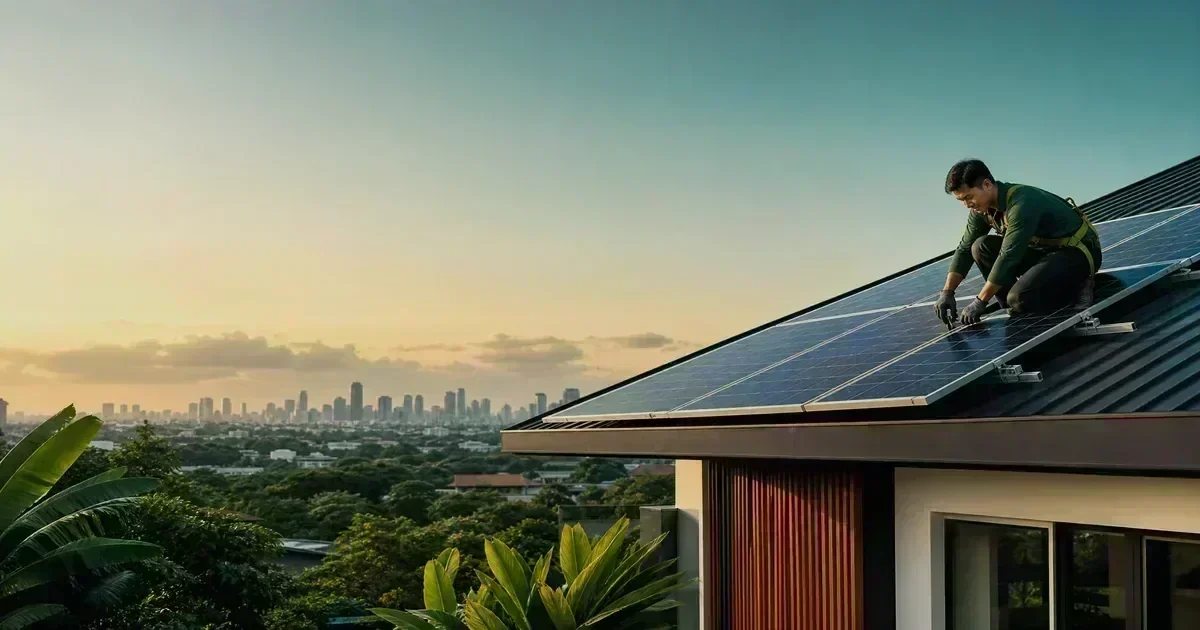
Choosing a solar system type is one of the first, and most important, decisions a Filipino homeowner makes before investing in solar. The three main configurations available in the local market are off-grid, hybrid, and grid-tied systems, and each serves a different purpose depending on your budget, backup needs, and access to the utility grid. For the next planning step, see solar-ready home planning guide.
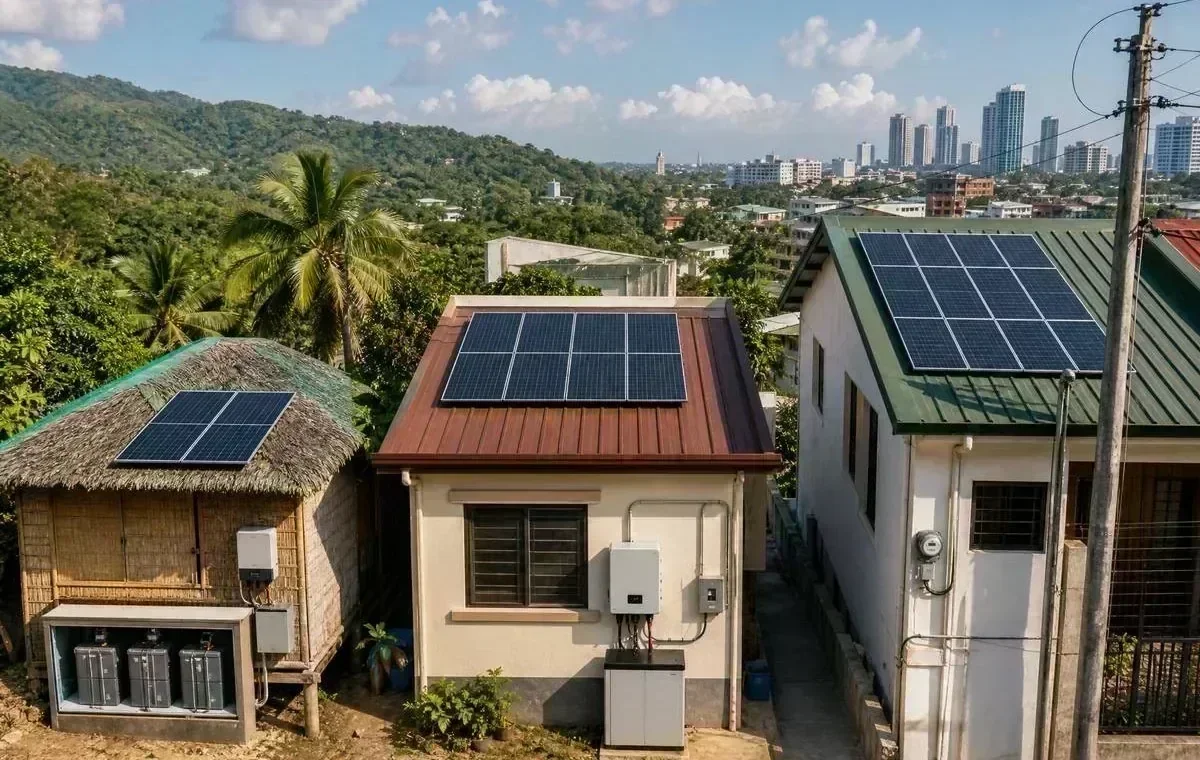
1. Grid-Tied Systems
A grid-tied (or on-grid) system connects directly to your utility line and has no battery storage. Solar power is used first, and any shortfall is drawn from the grid automatically. It is the most affordable setup per watt installed, but it offers zero backup power. When the grid goes down, your solar panels shut off too, for safety reasons. One upside: grid-tied systems qualify for Meralco net metering, letting you earn bill credits for excess export. For the next planning step, see solar battery runtime guide. For a personalized system check, use the CalcSolarPH solar calculator.
2. Off-Grid Systems
An off-grid system is fully independent from the utility company, relying entirely on solar panels and battery storage. This is common in remote provincial areas without grid access. While it provides complete energy independence, it requires a larger battery bank and panel array to cover cloudy days, which increases upfront cost significantly. For the next planning step, see LiFePO4 vs lead-acid battery comparison.
3. Hybrid Systems
Hybrid systems combine the best of both worlds: they stay connected to the grid for reliability while also storing solar energy in batteries for use during outages or nighttime hours. This is the most popular configuration for urban and suburban Filipino households, since brownouts are common but full grid independence is usually unnecessary.
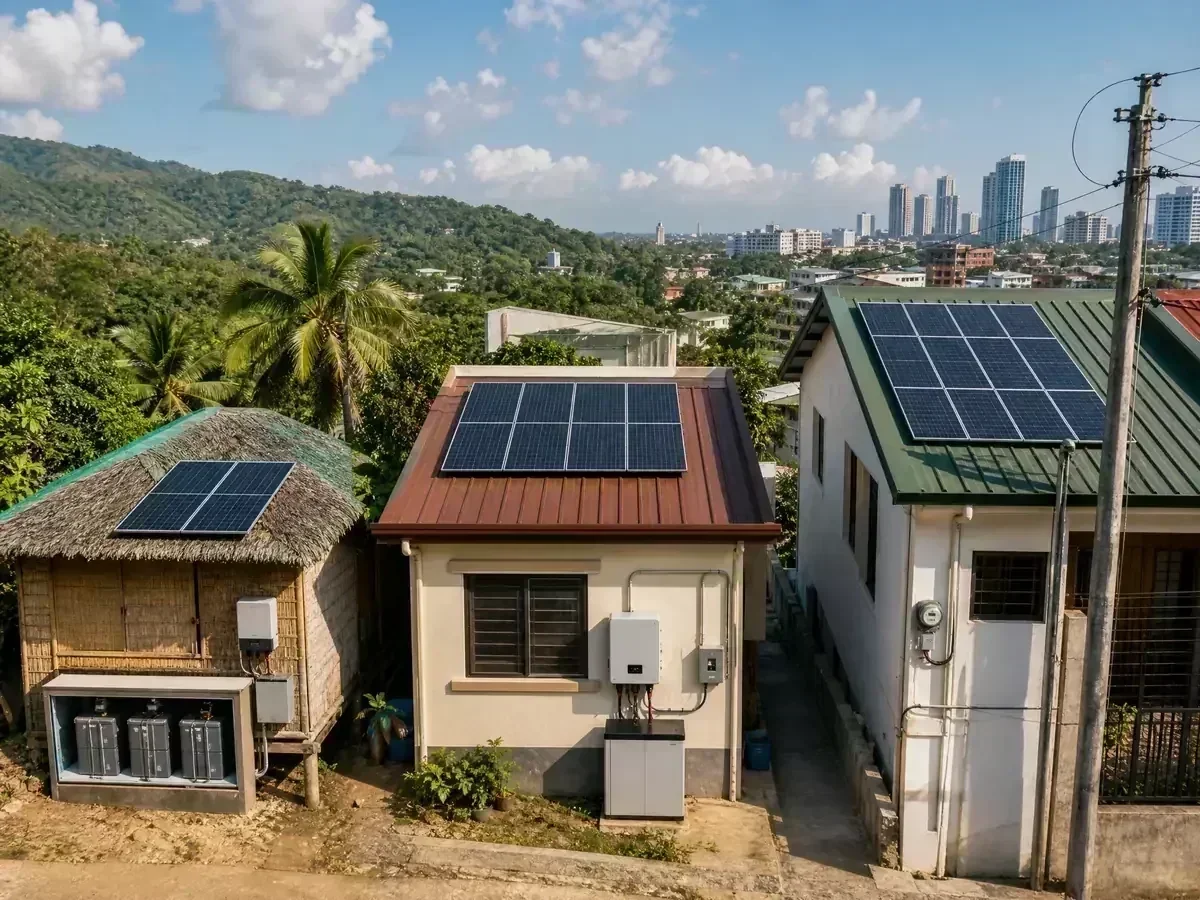
Which One Should You Choose?
- Grid-Tied: Best for lowering your electric bill only, with no need for blackout protection.
- Off-Grid: Best for areas with no grid access or unreliable utility infrastructure: learn how much solar power you need before sizing one.
- Hybrid: Best for most homes that want bill savings plus backup power during outages, the solar vs generator comparison explains why brownouts make this the PH favorite.
Once you've picked a configuration, use our free sizing calculator on the homepage to estimate the exact hardware requirements for your household's needs, then browse real hardware in our solar product catalog.
Compare the Three Solar System Types by Use Case
A grid-tied system is usually designed to reduce daytime grid consumption and may export approved surplus energy, but standard grid-tied inverters normally shut down during a grid outage for safety. An off-grid system is designed around solar, batteries, and backup generation if needed, so it must be sized for both energy and peak loads. A hybrid system combines grid connection with battery-backed backup circuits and can offer a balance between savings and resilience. For the next planning step, see essential-loads backup guide.
Questions for brownout-prone homes
If outages are rare and savings are the main goal, grid-tied may be sufficient. If the property has no reliable grid access, off-grid design may be necessary. If the home needs essential circuits during brownouts but still wants grid support, a hybrid system may be more appropriate. List the circuits that truly need backup instead of assuming the entire house must run from the battery.
Battery and Generator Planning
Off-grid and hybrid designs should document battery usable capacity, expected autonomy, generator input if included, critical-load limits, recharge strategy, and the behavior during consecutive cloudy days. Motors and compressors require surge capacity. A system that can run a phone charger may not be able to start a deep-well pump or air conditioner safely.
Frequently Asked Questions
Will a grid-tied solar system work during a blackout?
Usually not by itself. Standard grid-tied systems shut down when the grid is unavailable. Backup operation requires a properly designed hybrid or backup-capable system with approved isolation and protection.
Is off-grid always cheaper because there is no electric bill?
No. Off-grid systems often require more battery and backup capacity, especially during prolonged cloudy weather. The correct choice depends on grid availability, load requirements, and long-term operating priorities.
System Type and Philippine Rules Are Connected
Off-grid, hybrid, grid-tied, and zero-export systems have different operational and approval questions. A system intended to export excess power needs utility review; a backup system must address transfer behavior and anti-islanding; a PEZA facility may have a zone distribution arrangement that is unlike a home account. Label the system type in every quotation and handover document so the bill, equipment, and approval path are not confused.