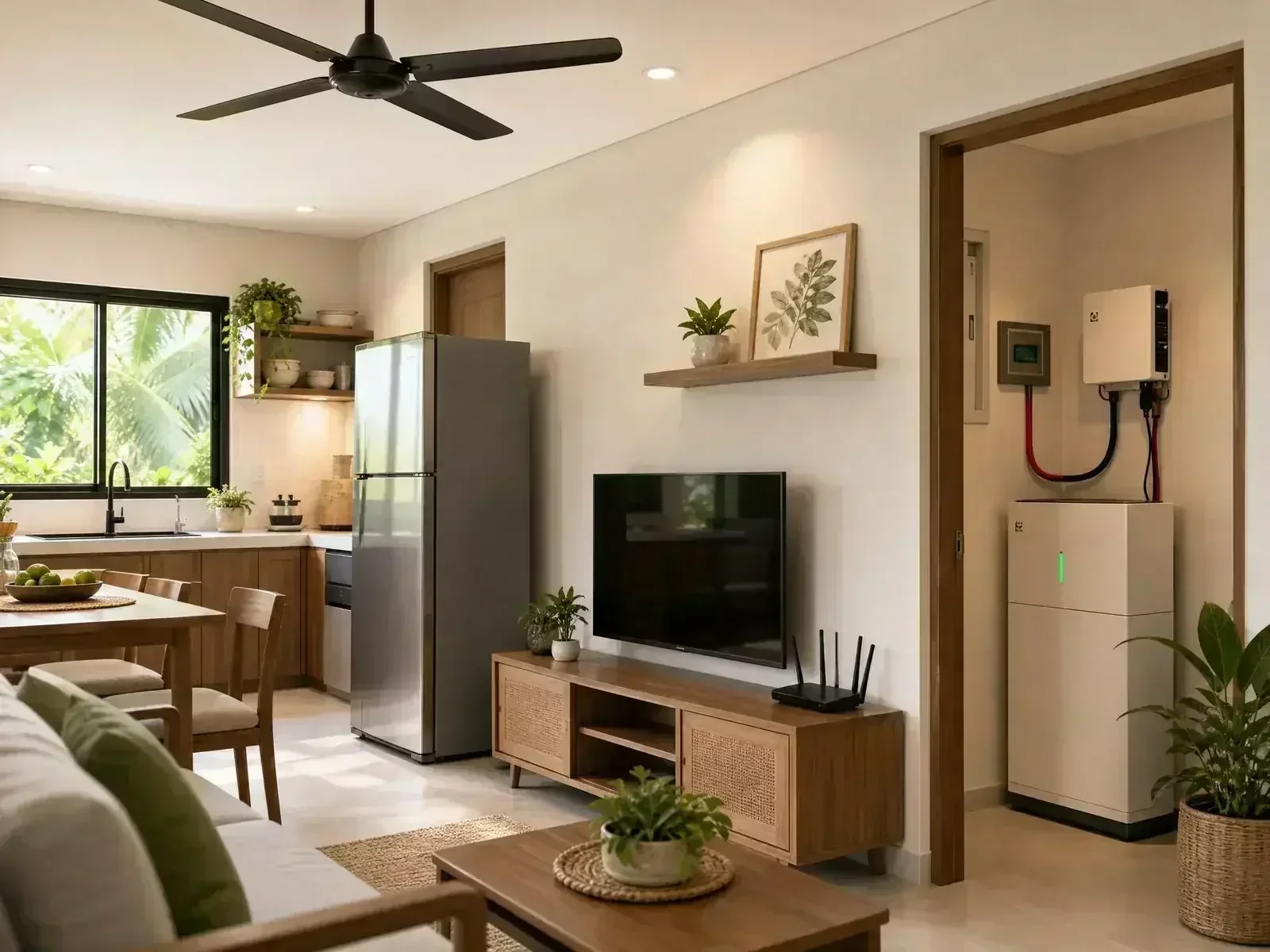
A ₱5,000 monthly electricity bill can point toward a modest residential solar system, but the bill alone does not determine the correct panel or inverter size. The useful starting point is your actual monthly kWh consumption, followed by daytime load, roof space, backup requirements, and whether you want grid-tied, hybrid, or off-grid operation.
What a ₱5,000 Bill Tells You
A peso bill is the product of electricity consumption and the applicable tariff. Because rates vary by utility, month, and customer class, two households with the same ₱5,000 bill can have different kWh consumption. Use the kWh shown on the bill whenever possible instead of converting pesos to system size using a fixed national rate. For a practical walkthrough of the bill itself, see how to read an electric bill for solar planning.
A Practical Starting Range
For many homes in this bill range, a preliminary discussion may land around a small-to-mid residential PV system rather than a large whole-home installation. The exact size should come from the site's kWh demand and solar-production assumptions. As a planning exercise, compare roughly 2–4kW of PV against your actual monthly usage, then adjust after checking roof space, shading and daytime consumption. This is a starting range, not a promised production or savings figure.
| Planning question | Why it matters |
|---|---|
| How many kWh do you use? | This is the better sizing input than pesos alone. |
| When do you use electricity? | Daytime loads can consume solar directly; nighttime loads need grid or battery energy. |
| Do you need blackout backup? | Backup changes inverter, battery and circuit-selection requirements. |
| How much usable roof space exists? | A theoretical PV target may not fit after setbacks, shading and access paths. |
Choosing the Inverter
Do not automatically match the inverter to the monthly bill. Inverter size is driven by simultaneous loads and motor-starting requirements. A home with a refrigerator, fans, lights, router and occasional kitchen loads may have very different peak demand from another home with the same monthly bill but an air conditioner, pump and electric cooking appliances running together.
For a hybrid system, also verify the battery voltage, maximum discharge current, PV input limits, and the loads that remain powered during an outage. The final inverter should be selected from the actual appliance load profile and the manufacturer's limits. For the detailed sizing factors, see the solar inverter sizing guide for motors, pumps, and refrigerators.
How Much Battery Do You Need?
Battery capacity is a backup-duration decision, not simply a percentage of the monthly bill. List the loads you want during an outage, total their running watts, and choose the number of backup hours or nights you need. Then account for usable battery capacity, inverter losses, temperature, battery limits and reserve margin.
If you only need lights, Wi-Fi, fans and a refrigerator for a short outage, the battery can be much smaller than one intended to support air conditioning or other heavy loads for many hours. For a deeper capacity check, see the LiFePO4 battery buying guide.
Roof and Solar-Production Checks
Before buying panels, check roof orientation, shade from trees and nearby buildings, roof condition, mounting area, cable routing and maintenance access. A clean 3kW array on a suitable roof can be more useful than a larger theoretical array placed on heavily shaded space.
What to Ask for in a ₱5,000-Bill Quotation
- Panel brand, model, wattage, quantity and total DC capacity.
- Inverter model, continuous output, battery voltage and PV input limits.
- Battery chemistry, nominal kWh, usable capacity, BMS limits and warranty.
- Protection devices, mounting system, cable sizes and grounding scope.
- Estimated annual/monthly production and the assumptions used to calculate it.
- What loads are backed up during an outage and what is intentionally excluded.
Use Your Actual Bill Before You Buy
Open your latest electric bill and record the kWh, billing days, tariff or total rate information available, and any unusual changes in consumption. Then use the calculator to model the load and compare the result with at least two quotations using the same assumptions.
Frequently Asked Questions
Is a ₱5,000 bill enough information to choose a solar package?
No. It is a useful starting signal, but the kWh consumption, peak loads, daytime usage, roof conditions and backup goals are needed for a defensible system design.
Can a ₱5,000 monthly bill be eliminated completely?
Not necessarily. Grid-tied export rules, weather, system losses, roof constraints and your future consumption all affect the result. A realistic target is based on measured consumption and the intended operating mode.
Should I choose battery storage for this bill level?
Choose a battery when backup or shifting solar energy into evening hours has enough value for your situation. If your main goal is daytime bill reduction and the grid is reliable, a battery may not be the first priority.