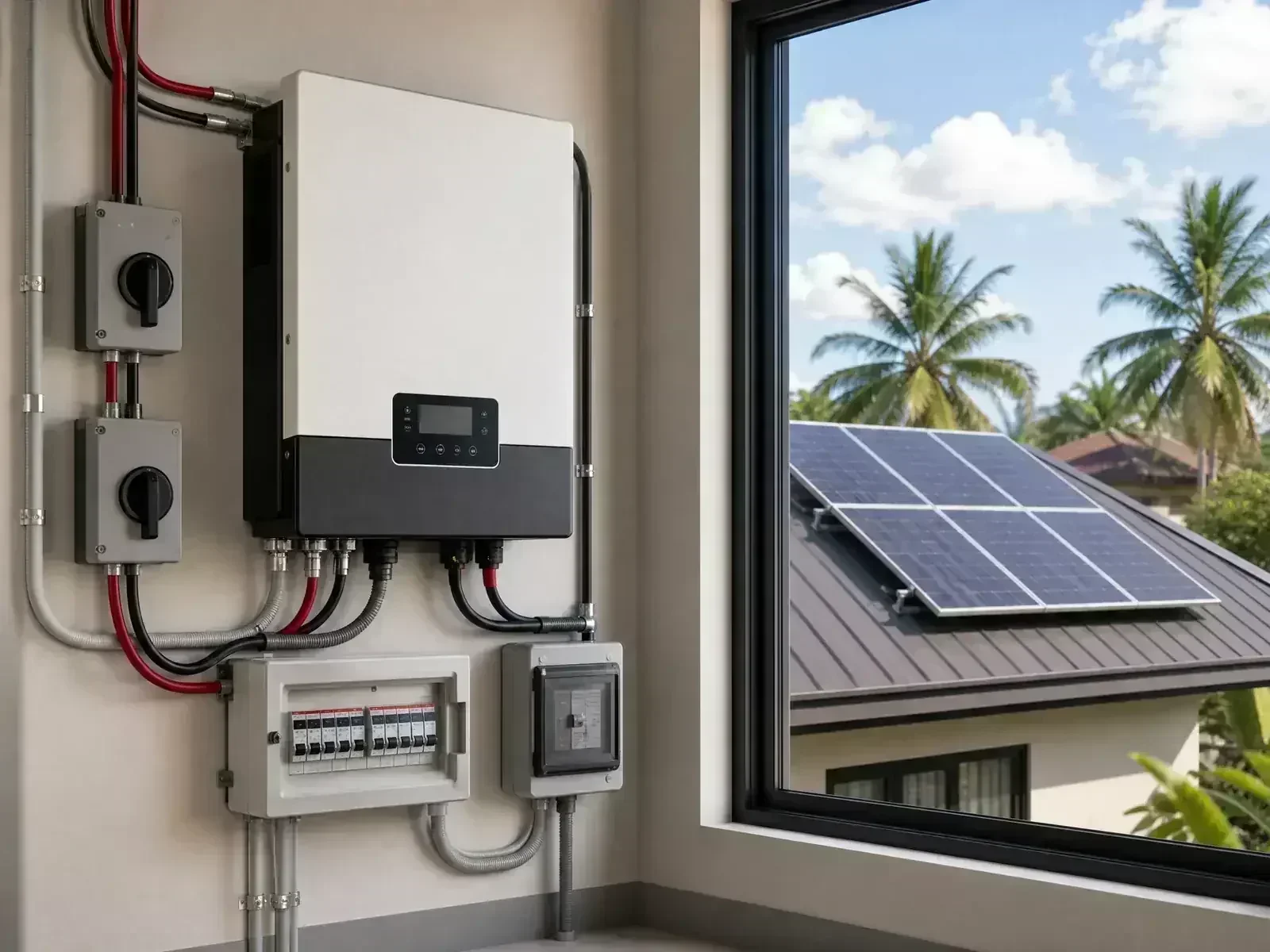
A ₱10,000 monthly electricity bill usually indicates substantially higher energy use than a ₱5,000 bill, but the correct solar system still cannot be selected from pesos alone. Start with monthly kWh, then size the PV array around energy consumption and solar access, size the inverter around simultaneous loads, and size the battery around the backup circuits and hours you actually need.
Why ₱10,000 Does Not Equal One Fixed System Size
Electricity tariffs vary by utility and billing period. A ₱10,000 bill in one month can represent a different kWh total from another month or another utility. Solar sizing should therefore use the kWh on the bill and, ideally, several months of history. The electric-bill reading guide explains which numbers to capture before sizing.
A Practical Planning Range
For a home around this bill level, a preliminary design discussion may commonly move into the mid-sized residential range. As a planning exercise, compare roughly 4–8kW of PV against the home's measured kWh consumption, roof area and daytime load. Some homes will need less, while homes with air conditioning, pumps, electric cooking or long operating hours may need more. This is not a production guarantee or a quotation target.
| Design item | What to verify |
|---|---|
| PV array | Monthly kWh, roof space, shade, orientation, panel wattage and inverter PV limits. |
| Inverter | Peak simultaneous load, motor surge, continuous output, battery voltage and PV input limits. |
| Battery | Backup loads, required hours, usable kWh, discharge current and BMS limits. |
| Grid connection | Whether the system is grid-tied, hybrid or off-grid and what utility requirements apply. |
Inverter Size Should Follow Peak Loads
A higher monthly bill does not automatically require a very large inverter. The key question is how much power the home demands at the same time. Multiple air conditioners, water pumps, refrigerators, induction cookers, ovens and other high-power appliances can overlap and create a much higher peak than the monthly energy figure suggests. For more detail, see the inverter sizing guide for motors, pumps, and refrigerators.
For hybrid backup, separate the whole-house load from the essential-load panel. A smaller inverter can sometimes provide useful outage protection if the backed-up circuits are deliberately limited.
Battery Sizing for Outages
Battery capacity should be calculated from the loads you intend to keep running during an outage. For example, a refrigerator, Wi-Fi, lights and selected fans may be a manageable backup group, while air conditioners and heating appliances can multiply the required battery energy quickly. Include conversion losses and keep within the battery's continuous discharge rating. For battery selection and usable-capacity checks, see the LiFePO4 battery buying guide.
Do Not Oversize Panels Without Checking the Inverter
A large PV array can be useful when the inverter permits it, but panel count must remain inside the inverter's maximum PV voltage, current and power limits. String voltage also changes with temperature, so the final design should use the manufacturer's electrical limits rather than only the panel's nominal wattage.
Compare Quotations on the Same Basis
- Total panel wattage and exact panel models.
- Exact inverter model, battery voltage, MPPT range and maximum PV input.
- Battery nominal and usable capacity, BMS current limits and warranty.
- Backup circuits and expected outage runtime.
- Protection, mounting, cabling, grounding, commissioning and monitoring scope.
- Production assumptions and whether the quotation separates equipment from installation and utility work.
Use the Bill History, Not One Month
If possible, use six to twelve months of bills. Look for seasonal air-conditioning changes, unusual appliance purchases, occupancy changes and billing anomalies. A system designed around an unusually high or low month can be unnecessarily expensive or undersized.
Frequently Asked Questions
Is a ₱10,000 bill enough to justify a 10kW solar system?
Not by itself. A 10kW array may be appropriate for some homes, but the decision should come from measured kWh, roof capacity, daytime demand and the inverter's permitted PV configuration.
Should a ₱10,000-bill home use a battery?
It can make sense when backup is important or when shifting solar energy into evening use provides enough value. The required battery size depends on the essential loads and desired runtime, not the peso bill alone.
What is the most important number on my electric bill?
The kWh consumption is usually the most useful starting point for energy sizing. Keep the bill amount as context, but do not convert pesos directly into panel capacity without considering the applicable tariff.