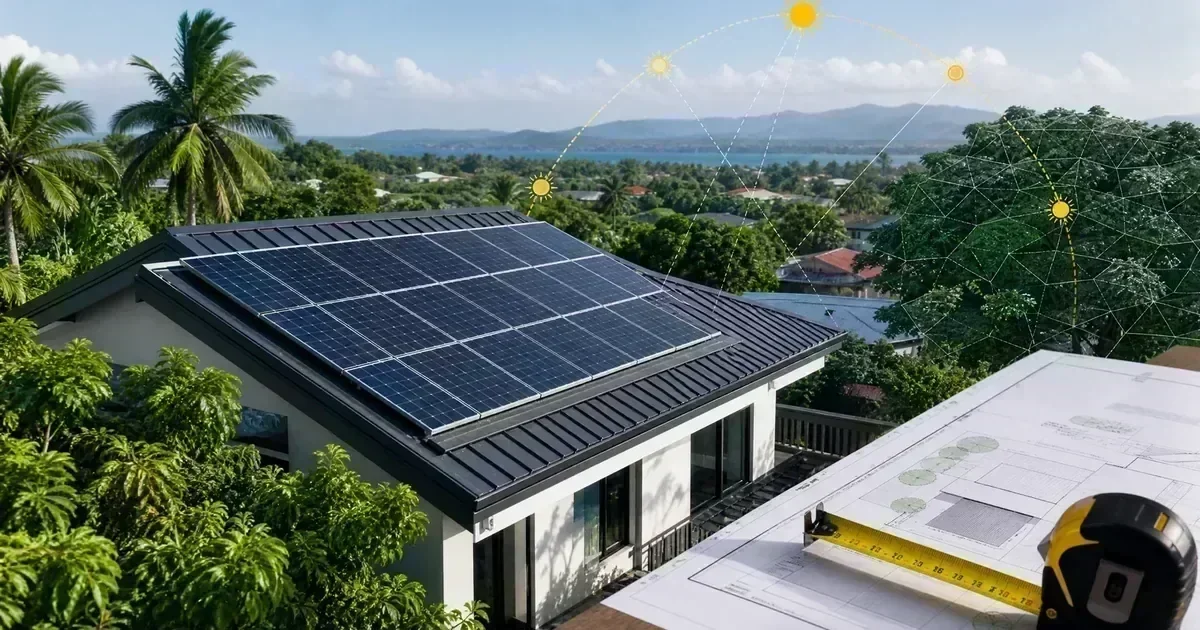
Quotations often begin with roof area, but solar suitability also depends on shade, roof age, access, drainage, wind exposure, electrical location, and the ability to maintain the array. A smaller clean area can outperform a larger shaded area. For the next planning step, see how to read your Philippine electric bill.
Map shade across the day
Observe the roof in the morning, around midday, and in the afternoon. Note trees, neighboring buildings, water tanks, antennas, parapets, and future construction. A phone compass or satellite image can help with orientation, but a site visit is needed to confirm heights and shadows. For a personalized system check, use the CalcSolarPH solar calculator.
Think in usable rectangles
Panel rows need spacing, edge setbacks, walkways, and room for clamps and cable routes. Divide the roof into usable rectangles rather than multiplying the entire roof area by a panel dimension. Include a maintenance path and avoid blocking gutters, vents, and access points. For the next planning step, see our inverter and panel sizing guide.
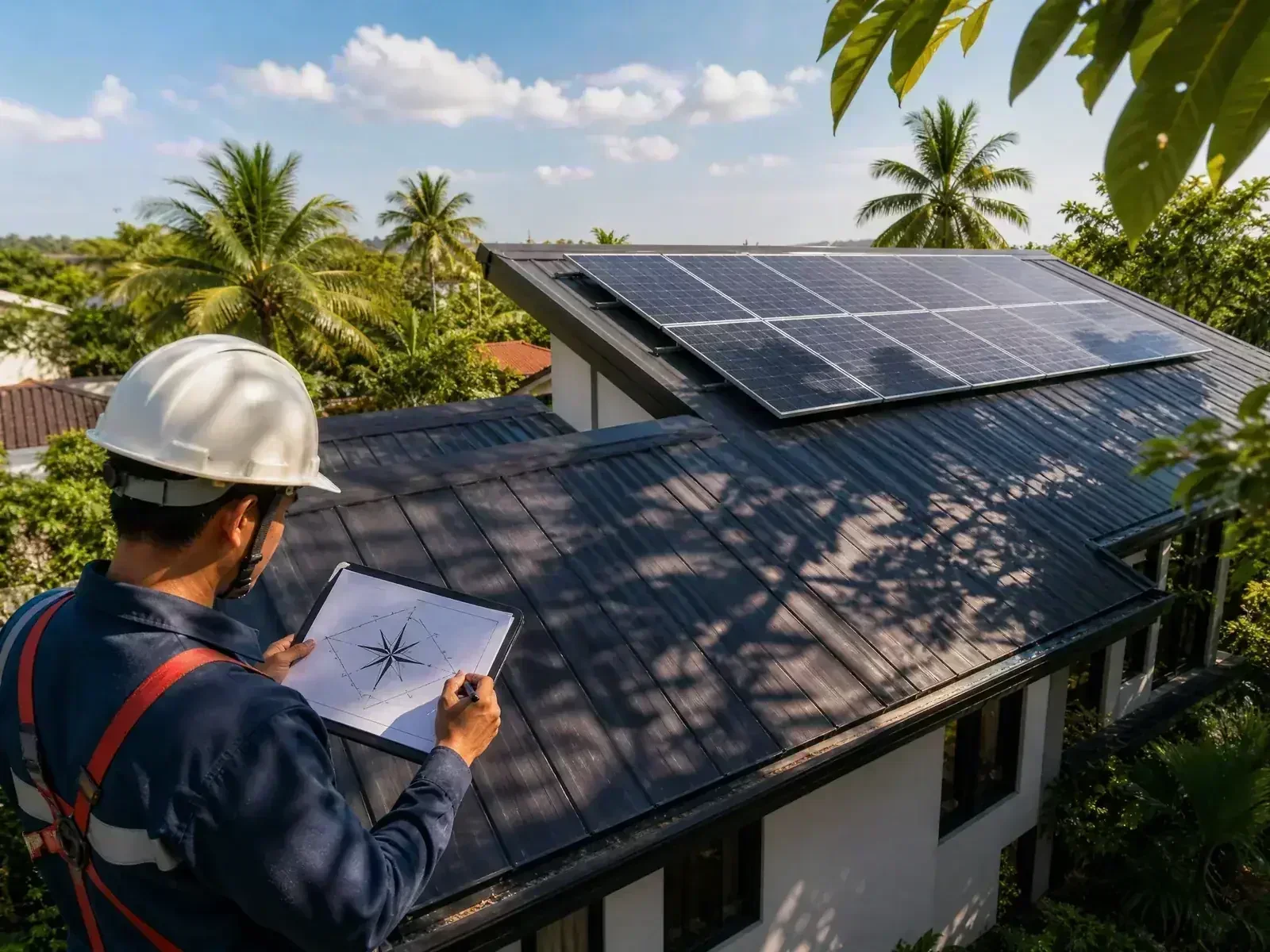
Check roof condition and waterproofing
Solar mounting should not hide an existing leak. Document roof age, material, fastener condition, corrosion, and drainage. Ask how penetrations will be sealed and who is responsible if waterproofing needs repair. Coastal locations may require special attention to corrosion-resistant hardware.
Consider orientation and electricity timing together
A layout that produces earlier in the day may be valuable for a household with morning loads, while a west-weighted layout can extend afternoon production. The best choice is a site-specific balance of annual energy, peak heat, shading, roof geometry, and household behavior.
Plan for Philippine weather
The mounting system must be selected for the site’s wind, roof construction, corrosion environment, and installer’s engineering method. A panel label alone does not prove that the entire roof attachment is suitable for severe weather. Request the mounting and attachment approach in writing.
Ask for the right survey outputs
A useful site assessment should show panel layout, estimated shade assumptions, roof and electrical photos, inverter location, cable route, structural considerations, and exclusions. It should explain what is measured and what remains an estimate. For the next planning step, see inverter sizing for motors, pumps, and refrigerators.
Use competing quotations intelligently
Compare proposals using the same assumptions: panel wattage, annual energy estimate, battery usable capacity, backup circuits, warranty terms, monitoring, and installation scope. The cheapest price is not necessarily the lowest total cost if the roof work or electrical upgrades are missing.
Frequently Asked Questions
Does a roof need to face due south in the Philippines?
Not necessarily. The best layout depends on the roof, local sun path, electricity-use timing, shading, and structural constraints. An installer should evaluate the actual site instead of applying a single direction rule.
How much shade is too much for solar panels?
There is no universal answer because the effect depends on timing, affected modules, string design, and power electronics. Even partial morning or afternoon shade should be mapped before the panel layout is finalized. For the next planning step, see how much solar power your home actually needs.
Should I replace an old roof before installing solar?
If the roof is near the end of its service life or has leaks, repair or replacement should be considered first. Removing a solar array later to repair the roof adds cost and disruption.
For a first estimate, use the CalcSolarPH solar calculator, then compare the result with your actual loads and roof conditions. You can also browse the solar products catalog before speaking with an installer.
Why shade mapping matters
Illustrative relative-output example, not a guaranteed production forecast. A site survey should measure the actual roof, shade movement, module layout, and electrical design.
| Condition | Relative output example |
|---|---|
| Clear roof section | 100% |
| Morning shade | 88% |
| Midday shade | 72% |
| Heavy recurring shade | 48% |
Philippine Roof and Weather Evidence
A useful site record includes roof material, approximate orientation, usable dimensions, shading by hour, nearby trees or buildings, drainage, corrosion exposure, typhoon-risk considerations, and safe maintenance access. A clear midday photograph is not enough to prove annual solar access. Compare observations across morning and afternoon, and ask the designer to document assumptions rather than presenting a single ideal output.
Source note: Peso rates and utility requirements change. This is a planning example, not a tariff quote, engineering approval, or promise of savings. Verify the current bill and official utility guidance before purchasing or connecting equipment.
Five roof checks before you buy panels
A roof can look large enough for solar while still being a poor installation surface. Before comparing panel prices, check usable area, shade throughout the day, roof condition, access, and the location of electrical equipment.
- Usable roof area: leave practical space for setbacks, walkways, mounting, and maintenance.
- Shade: observe nearby trees, buildings, water tanks, antennas, and future obstructions at different times of day.
- Roof condition: avoid using a solar array to postpone necessary roof repairs.
- Orientation and tilt: treat them as production variables, not magic numbers; local shading can matter more than a small orientation difference.
- Cable and inverter location: long cable routes can increase voltage drop and installation complexity.