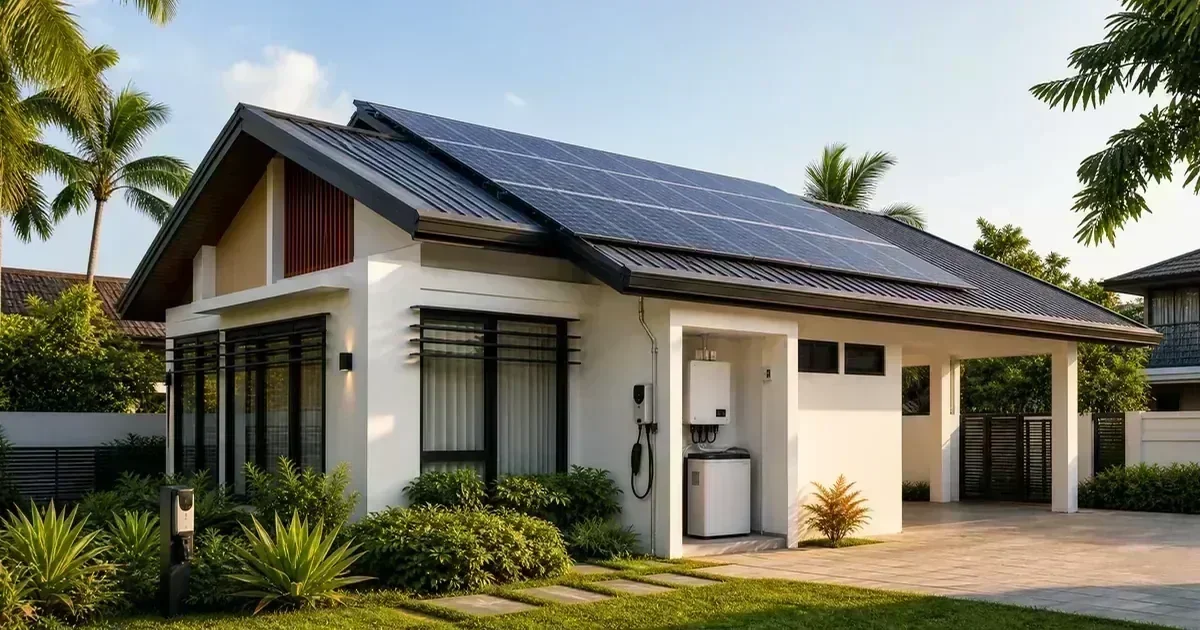
Solar planning is easiest before concrete, ceilings, roof finishes, and electrical walls are closed. You do not have to commit to a complete system on day one. Instead, design the house so a future installer does not need to break finished surfaces, run exposed conduit across rooms, or place batteries in an unsuitable corner. In the Philippines, this matters because roof heat, intense rain, salt air in coastal areas, and typhoon exposure all affect where equipment can safely live. For the next planning step, see off-grid vs hybrid vs grid-tied guide.
Reserve a practical roof zone
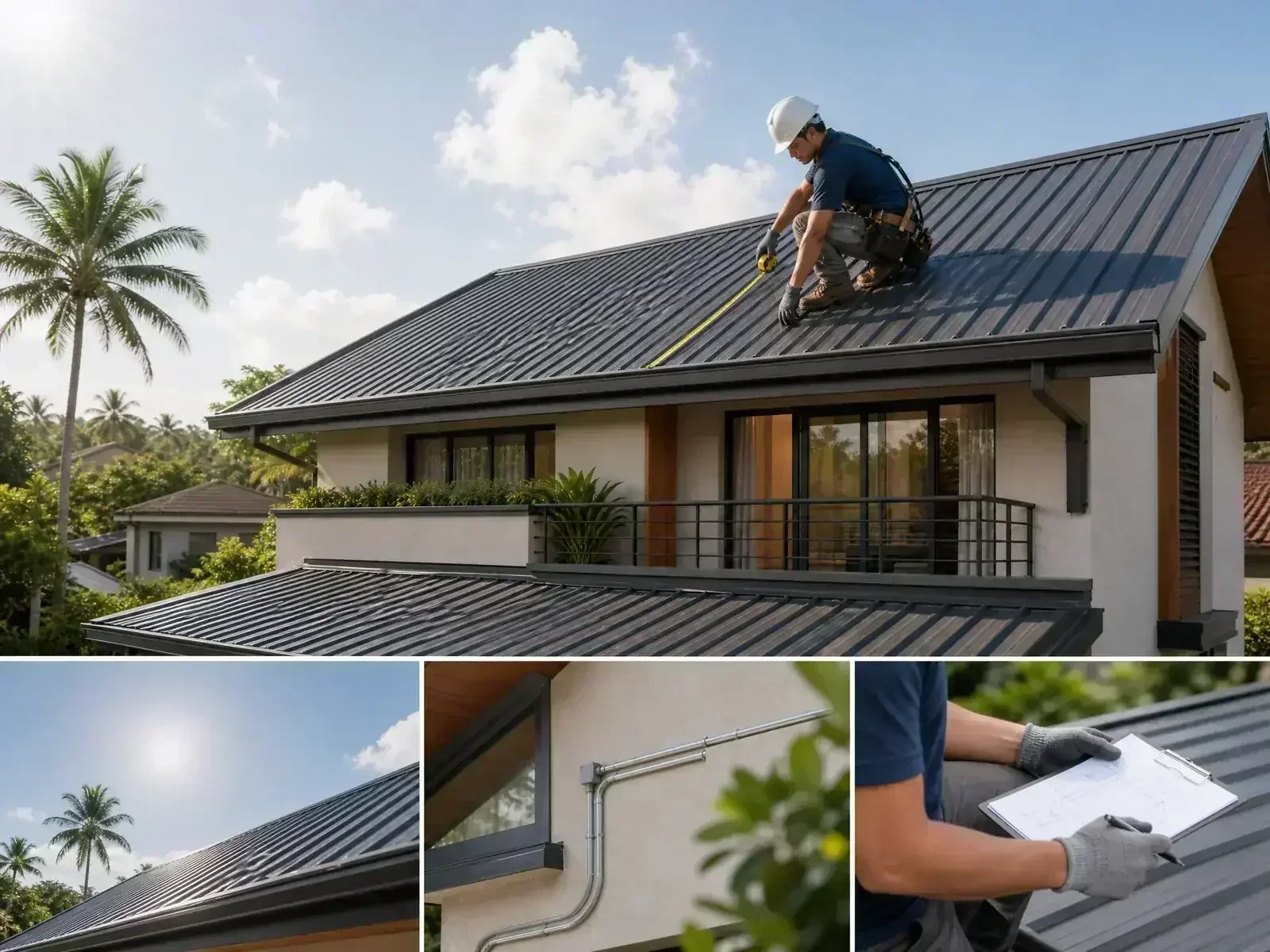
A roof can look large from the street but have little usable solar area after setbacks, water tanks, skylights, vents, parapets, shade, and maintenance paths are considered. Mark a rectangle for future panels and keep a clear route for technicians. Avoid placing panels where a later repair would require stepping on fragile roofing. Ask the designer to show the usable area at different times of day, not only at noon. For the next planning step, see how much solar power your home actually needs. For a personalized system check, use the CalcSolarPH solar calculator.
Plan conduits without creating future leaks
Provide a documented route from the roof to the inverter and from the inverter to the main electrical board. Conduits should be accessible, sized for the intended cable count, protected from sharp edges, and sealed against rain. Do not bury unknown cable joints inside walls. Leave a pull string and label both ends, then photograph the route before it is concealed.
Choose the electrical equipment location
The inverter needs ventilation, service clearance, and protection from direct flooding. Batteries need an even, stable surface and a location that follows the manufacturer’s temperature, clearance, and fire-safety instructions. The main panel, disconnects, surge protection, and monitoring gateway should be organized so a technician can identify them quickly.
Grounding, bonding, and surge protection
A solar-ready design should reserve space for grounding and bonding conductors, DC and AC disconnects, and surge protection selected for the actual system. Lightning and surge risk varies by location and wiring arrangement. These are not decorative add-ons; they are part of the electrical design and should be specified by a licensed professional.
What to record for the future installer
Keep roof plans, structural drawings, electrical single-line diagrams, conduit photos, breaker schedules, waterproofing details, and the model numbers of installed protective devices. A future quotation becomes more accurate when the installer can see what is behind the walls and which loads are essential. For the next planning step, see essential-loads backup guide.
A practical pre-construction checklist
Before closing the walls, verify the roof zone, cable paths, inverter wall, battery location, grounding route, panel capacity, spare breaker spaces, internet or communications route, and access for maintenance. The goal is not to guess the final panel count; it is to remove avoidable installation constraints while the structure is still easy to change. For the next planning step, see our inverter and panel sizing guide.
Final advice
A solar-ready home is flexible rather than overbuilt. Plan for today’s loads, reserve capacity for realistic future additions, and let the final system be sized from measured electricity use. You can use CalcSolarPH’s free solar calculator as an initial estimate, then have the completed design checked on site by a qualified installer.
Frequently Asked Questions
Should I install solar while building a new house?
Not always. The best early decision is to reserve roof space, conduits, structural allowance, and an electrical location. Equipment can be purchased later when your loads and budget are clearer.
What wiring should be planned before the walls are finished?
Ask a qualified electrician or solar professional to plan routes for PV cables, battery cables where applicable, communications wiring, grounding, and a future connection to the main distribution board.
Does a solar-ready home need a special roof?
It needs a roof with usable, shade-free areas, suitable structural support, safe access, and a waterproofing plan. The final design depends on the roofing material, orientation, wind exposure, and equipment layout.
For a first estimate, use the CalcSolarPH solar calculator, then compare the result with your actual loads and roof conditions. You can also browse the solar products catalog before speaking with an installer.
Solar-ready home priorities at a glance
Illustrative planning score, not an engineering rating. Use it to decide which pre-installation tasks deserve attention first.
| Planning area | Priority score |
|---|---|
| Roof condition and usable area | 5/5 |
| Conduit routes and service access | 4/5 |
| Main panel capacity | 4/5 |
| Grounding and protection plan | 3/5 |
| Future expansion allowance | 2/5 |
Design for the Correct Philippine Approval Path
Before reserving roof space or conduits, identify the distribution utility, service voltage, intended system type, and whether export to the grid is planned. ERC net-metering rules and the utility’s current process matter for grid-interactive systems; a battery backup system that does not export is not automatically the same as a net-metered system. PEZA rules and zone contracts are relevant only where the property or project is within an economic zone or uses a designated zone distribution arrangement.