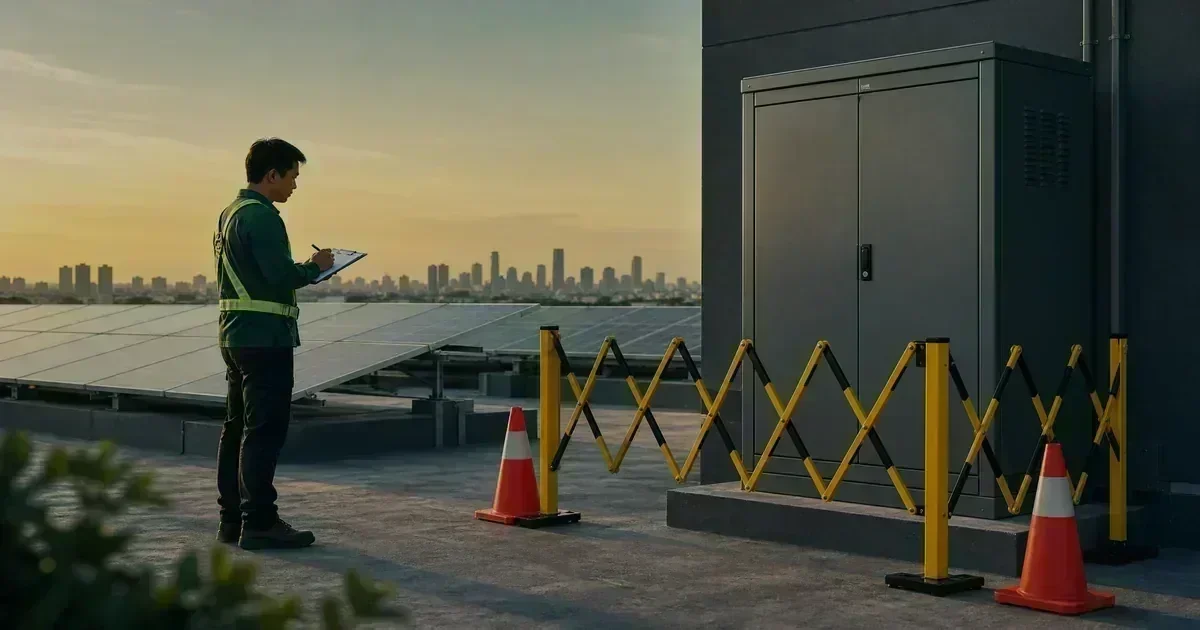
Learn how to document solar faults without contacting live DC conductors, using monitoring records, safe observations, model data, and a structured professional handoff. For the next planning step, see solar wiring architecture guide.
Why DC faults deserve extra caution
DC arcs can behave differently from AC faults and may be sustained by a PV array or battery. The risk depends on voltage, current, energy source, weather, equipment condition, and the distance between the person and the fault. A basic multimeter is not automatically safe for every solar circuit. For the next planning step, see solar cable sizing and voltage-drop guide. For a personalized system check, use the CalcSolarPH solar calculator.
Use a no-contact diagnostic first
Record the time, weather, inverter state, battery state, alarm code, monitoring trend, visible connector condition, and affected circuit. Take photographs only from a safe position. Check manuals and service notices. This information often narrows the problem before any electrical measurement is required.
Instrument and category questions
A qualified tester should select instruments rated for the circuit voltage, fault environment, measurement category, and intended test. Ask whether the instrument is appropriate for PV DC, whether leads and probes are intact, and what isolation and verification steps are required. Do not borrow an unknown meter for a high-energy test.
Never defeat the safety chain
Do not tape down a protective switch, hold a disconnect closed, bypass a fuse, bridge a terminal, or probe a connector with improvised metal. These actions can turn a controlled fault into an arc or remove the very evidence that a protection device is working. For the next planning step, see solar backfeed and transfer-switch safety guide.
Build a useful service packet
Provide a one-page incident timeline, screenshots, model and serial data, photographs, ambient conditions, recent changes, and the exact symptom. A technician can then plan the correct test sequence and bring the appropriate equipment.
Use a structured service handoff
Record the symptom, time, operating state, recent changes, safe photographs, model numbers, alarm codes, and questions. A qualified technician can then select the correct instruments and isolation method instead of relying on guesswork.
Frequently Asked Questions
Can I measure PV voltage with any multimeter?
No. Instrument ratings and the circuit environment matter. Ask a qualified person to select and perform energized testing.
What can I safely do first?
Use monitoring, safe visual inspection, documentation, and comparison with normal operating periods. Do not touch or disconnect conductors.
When should I leave the area?
Leave and keep others away if there is smoke, arcing, burning smell, water intrusion, exposed conductor, unusual heat, or repeated protection operation.
For a first estimate, use the CalcSolarPH solar calculator, then review the solar products catalog and consult a qualified professional for energized testing or final electrical work.
Philippine Homeowner Evidence and Professional Handoff
A safe DIY report can include inverter screenshots, time-stamped alarms, weather and shading notes, battery state-of-charge, equipment model numbers, and photos taken from a safe distance. A qualified person should select the measurement category, voltage rating, PPE, isolation method, and test sequence. A normal-looking reading is not proof that a system is safe. For the next planning step, see typhoon-proof solar installation guide.
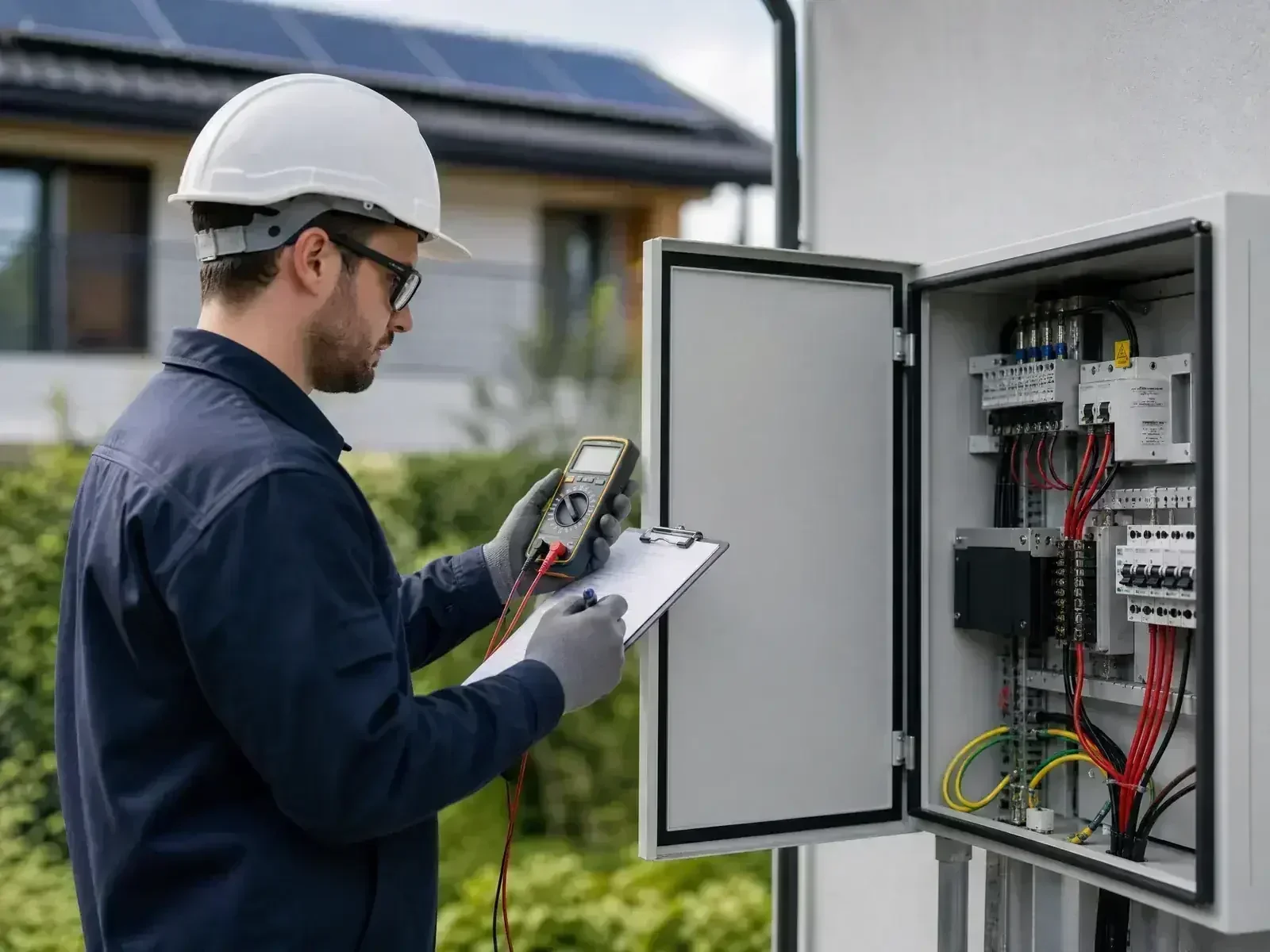
| DIY-safe record | Do not infer from it | Qualified-person follow-up |
|---|---|---|
| Model, serial, alarm, date, weather, load condition | That the conductor or battery is safe to touch | Select instruments, isolation method, PPE, and test sequence |
| Photos from a safe distance and manufacturer limits | That a reset solved the root cause | Verify protection, connections, grounding, and equipment condition |
| Utility/installer documents and one-line diagram | That grid operation is approved | Complete required inspection, commissioning, and handoff |