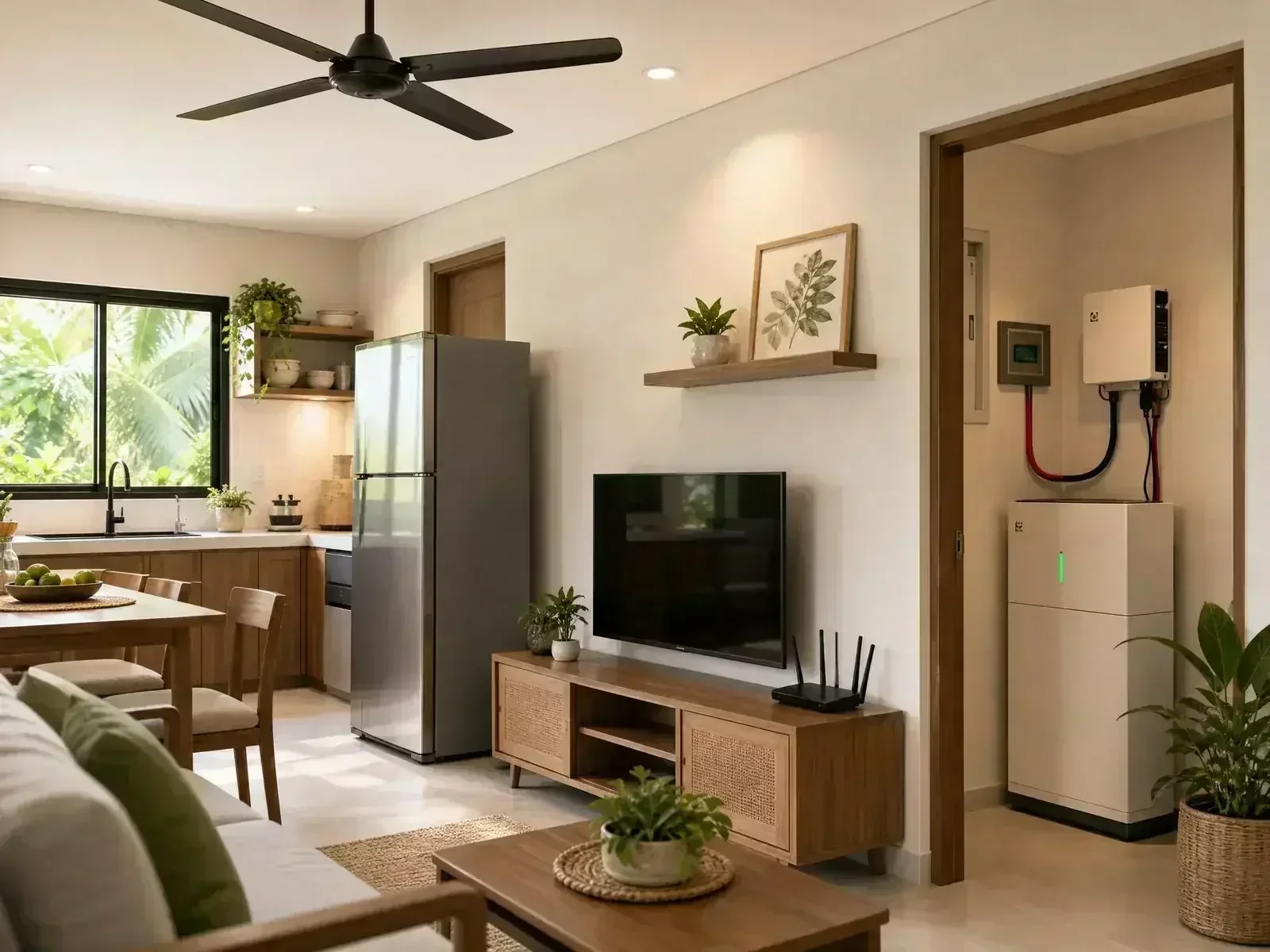
A 5kW solar system is often described as if it can automatically run any combination of appliances below 5,000 watts. That is not how system limits work. The inverter's continuous output, surge capability, battery discharge limit, solar production, and the appliances operating at the same time all matter.
What Can a 5kW Solar System Actually Run?
A 5kW solar system does not mean you can run 5kW of appliances indefinitely. Inverter output limits simultaneous AC power; PV limits daytime generation; the battery limits stored energy and discharge current; motors can add starting surge.
| Load combination | Main issue |
|---|---|
| Fridge + fans + lights + router | Usually modest running demand; compressor start still matters. |
| Aircon + normal household loads | Check actual input and simultaneous demand. |
| Kettle/iron/rice cooker + other loads | Heating appliances can quickly push the total toward the inverter limit. |
For backup, calculate runtime separately. A 5kW inverter does not make a 5kWh battery last one hour at full AC load after conversion losses and battery limits.
What can a 5kW inverter run?
For a typical Philippine home, a 5kW inverter can provide substantial headroom for everyday loads such as a refrigerator, lighting, fans, networking equipment, computers and selected kitchen or laundry appliances. The exact combination must be checked from the appliances' actual nameplate ratings rather than from the system label alone.
| Load example | Planning consideration |
|---|---|
| Refrigerator + lights + fans + router | Generally a modest simultaneous load; starting current still matters for compressor appliances. |
| 1HP inverter air-conditioner + normal household loads | Often feasible from an inverter-capacity perspective, but actual AC input varies with model, temperature and operating condition. |
| Rice cooker or other heating appliance | Heating elements can consume hundreds to thousands of watts; check what other heavy loads are operating at the same time. |
| Water pump | Motor starting demand can be much higher than running demand, so surge capability and motor characteristics matter. |
| Induction cooker | High instantaneous power can consume a large share of inverter capacity by itself. |
5kW inverter does not mean 5kW of solar panels
The inverter rating and PV array size are different design variables. A system may have a 5kW AC inverter with a larger or smaller DC panel array, subject to the inverter's permitted PV voltage, current and power limits. Likewise, a battery-backed system must be checked against the battery's continuous discharge rating.
Why simultaneous loads matter
Suppose a home has a refrigerator, several fans, lights, a router, a computer, an air-conditioner, and a rice cooker. The question is not whether each appliance is individually "below 5kW." The important question is how much power is being demanded at the same moment. A 5kW inverter can have comfortable headroom when the rice cooker is off, then approach its limit when cooking, air-conditioning, pumping, and other loads overlap.
This is also why a system should not be sized from a monthly electricity bill alone. A bill is an energy figure; inverter sizing is heavily influenced by instantaneous demand. Two homes with the same monthly kWh consumption can need very different inverter capacities if one concentrates its loads at the same time.
A simple load-stacking example
Imagine a planning case with a refrigerator around 150W, several fans and lights, networking equipment, a computer, and a 1HP inverter air-conditioner. Adding a 700W rice cooker may still leave substantial inverter headroom, but adding another large heating load or motor at the same moment changes the calculation. The actual values should come from the equipment nameplates or measurements; the examples here are only a way to understand the principle.
For motor-driven equipment, check starting behavior separately. A pump or compressor can create a short surge even when its normal running wattage looks modest. If the inverter trips only when a motor starts, the issue may be surge capability rather than average energy consumption.
What changes during a brownout?
If the system is intended to provide backup, the critical question becomes which loads are on the backed-up output and how much battery energy is available. A system that can support a 4kW daytime load from PV does not necessarily have enough stored energy to run that same load all night.
Use your actual appliances
For a personalized result, enter your appliances, quantities, operating schedule and location in the CalcSolarPH solar calculator. Then review the essential-loads backup guide, inverter sizing guide for motors and refrigerators, and 5kW vs 8kW vs 10kW inverter comparison before buying.
The rule of thumb to remember
Do not ask only, “Can a 5kW system run this appliance?” Ask, “Can the inverter handle this appliance's running and starting demand while my other simultaneous loads are operating, and can the battery or grid support it for the time I need?” That question produces a much more useful solar design.
A 5kW Inverter Does Not Mean “5kW of Appliances All Day”
The first distinction is between power and energy. A 5kW inverter describes a power limit. Your battery and solar array determine how long you can sustain that load. A home could run a 4kW load briefly and still have a very different energy requirement from a home that runs 1kW continuously for many hours.
| Example load | Approx. power | Design lesson |
|---|---|---|
| Refrigerator | ~80–200W while running | Startup surge matters more than the running wattage. |
| Rice cooker | ~400–800W | Manage simultaneous use with other heating appliances. |
| Electric kettle | ~1,200–1,800W | Short runtime but large instantaneous demand. |
| Iron | ~800–1,500W | Another high-power resistive load. |
| Desktop + monitor + router | ~100–400W | Good candidate for a protected essential-load circuit. |
These are planning examples, not guaranteed appliance ratings. Check the nameplate or measured consumption of your actual appliances before final sizing.
The Right Question to Ask
Instead of asking “Can a 5kW system run my house?”, ask: “Which loads must run simultaneously, for how many hours, and how much solar energy do they consume each day?” That gives you the information needed to size the inverter, PV array and battery separately.
Frequently Asked Questions
Can a 5kW inverter run an aircon, refrigerator, and rice cooker at the same time?
It depends on the actual running and starting wattage of the appliances operating together, not on the 5kW label alone. Add up the simultaneous loads, including motor-starting surges, and compare the total against the inverter's continuous and surge capacity before assuming everything can run together.
Does a 5kW inverter mean I need 5kW of solar panels?
No. The inverter's AC output rating and the DC solar panel array are separate design choices, both governed by the inverter's permitted PV voltage, current, and power input. A 5kW inverter can be paired with a smaller or larger panel array depending on the design.
Why does my 5kW system trip only when a pump or aircon starts?
Motors and compressors can draw a short but much higher starting current than their normal running wattage. If the inverter trips at startup but runs fine afterward, the issue is usually surge capability rather than average energy consumption. Check the appliance's starting current and the inverter's surge rating.