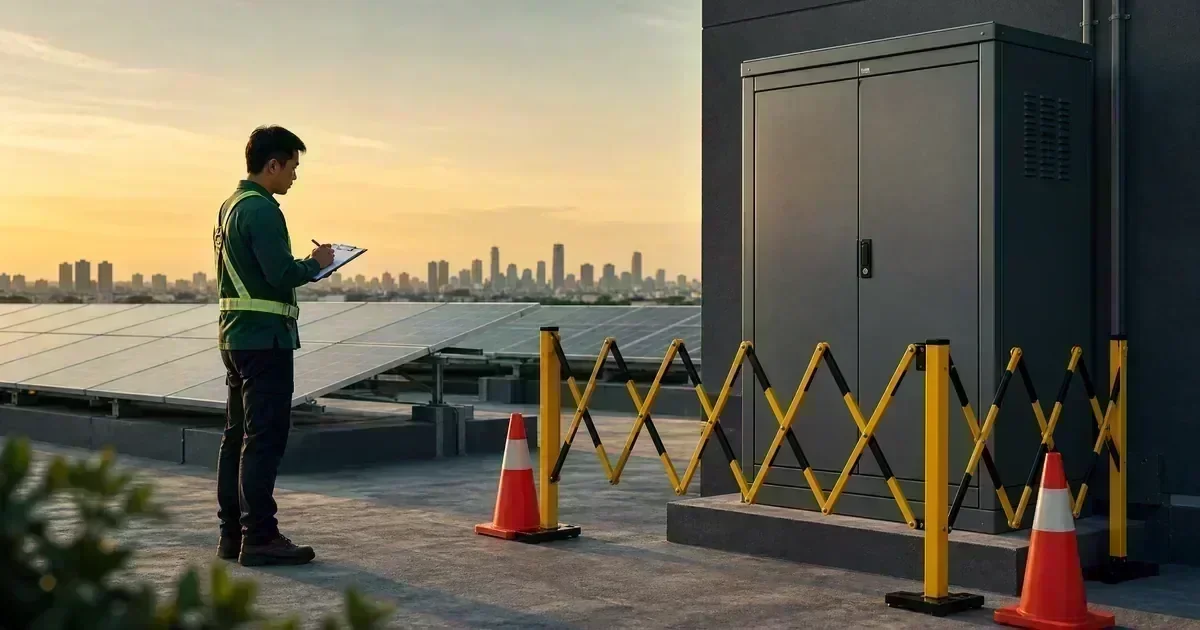
Understand why intentional solar short-circuit tests can be hazardous and how DIY owners can use monitoring, documentation, and qualified testing instead. For the next planning step, see solar wiring architecture guide.
Why the word short circuit matters
A PV array can continue producing energy whenever light reaches the modules. A battery can also deliver very high fault current. Intentionally connecting conductors together is therefore not a harmless “quick test”; it can create an arc, heat a conductor, damage connectors, trip protection, or expose the person nearby to a dangerous fault. For the next planning step, see solar backfeed and transfer-switch safety guide. For a personalized system check, use the CalcSolarPH solar calculator.
Why online test videos can mislead
A video may omit the equipment rating, weather, array voltage, instrument category, protective equipment, isolation procedure, or emergency plan. A procedure that appears controlled on a small training panel is not automatically safe on a rooftop array or battery-backed hybrid system. For the next planning step, see solar cable sizing and voltage-drop guide.
Use evidence before intervention
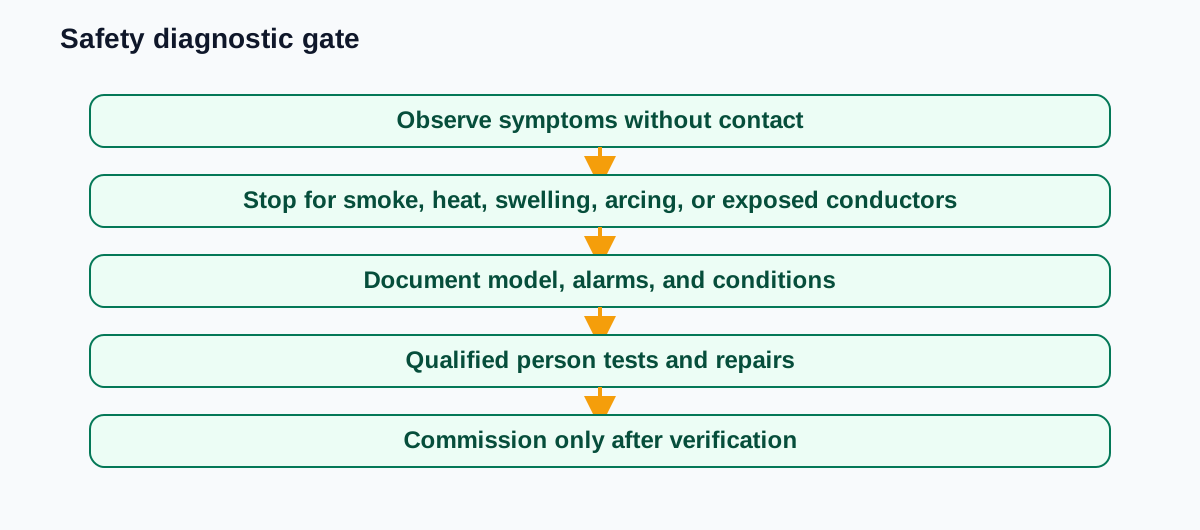
Start with monitoring trends, inverter codes, safe visual observations, connector history, weather notes, and the exact model numbers. Compare the affected string or device with similar operating periods. Preserve screenshots and timestamps so a qualified technician can decide which tests are justified.
What qualified testing should document
Ask the professional to document the instrument category and calibration, isolation state, test points, expected values, measured values, environmental conditions, and acceptance criteria. The report should identify whether the issue is at the module, string, protection device, cable, connector, controller, inverter, or monitoring layer.
Stop-work conditions
Stop immediately for smoke, burning smell, visible arcing, damaged insulation, melted connectors, water inside an enclosure, unexpected heat, exposed conductors, or repeated protection trips. Keep people away and contact the installer or qualified electrician. Do not recreate the fault to make the symptom easier to see.
Use a structured service handoff
Record the symptom, time, operating state, recent changes, safe photographs, model numbers, alarm codes, and questions. A qualified technician can then select the correct instruments and isolation method instead of relying on guesswork.
Frequently Asked Questions
Can a homeowner test a panel by shorting its leads?
No. Intentional short-circuit testing should not be performed as an improvised DIY procedure. Use monitoring and qualified testing with correctly rated instruments.
What should I send to a technician?
Send model numbers, safe photographs, monitoring screenshots, dates, weather, alarm codes, and a description of what changed.
Why did the breaker not prevent danger?
Protection devices reduce risk but do not make every fault safe. Their operation depends on rating, location, coordination, current path, and system condition.
For a first estimate, use the CalcSolarPH solar calculator, then review the solar products catalog and consult a qualified professional for energized testing or final electrical work.
Philippine Homeowner Evidence and Professional Handoff
Short-circuit current is a rating and a design parameter, not an invitation to create a fault. For a DIY owner, the safe evidence package is the module datasheet, string design, alarm history, visible condition, and a qualified person’s test report. In a Philippine rooftop, heat, salt air, dust, rain, and connector aging can change the risk profile. Never use a deliberate fault as a home experiment. For the next planning step, see typhoon-proof solar installation guide.
| DIY-safe record | Do not infer from it | Qualified-person follow-up |
|---|---|---|
| Model, serial, alarm, date, weather, load condition | That the conductor or battery is safe to touch | Select instruments, isolation method, PPE, and test sequence |
| Photos from a safe distance and manufacturer limits | That a reset solved the root cause | Verify protection, connections, grounding, and equipment condition |
| Utility/installer documents and one-line diagram | That grid operation is approved | Complete required inspection, commissioning, and handoff |