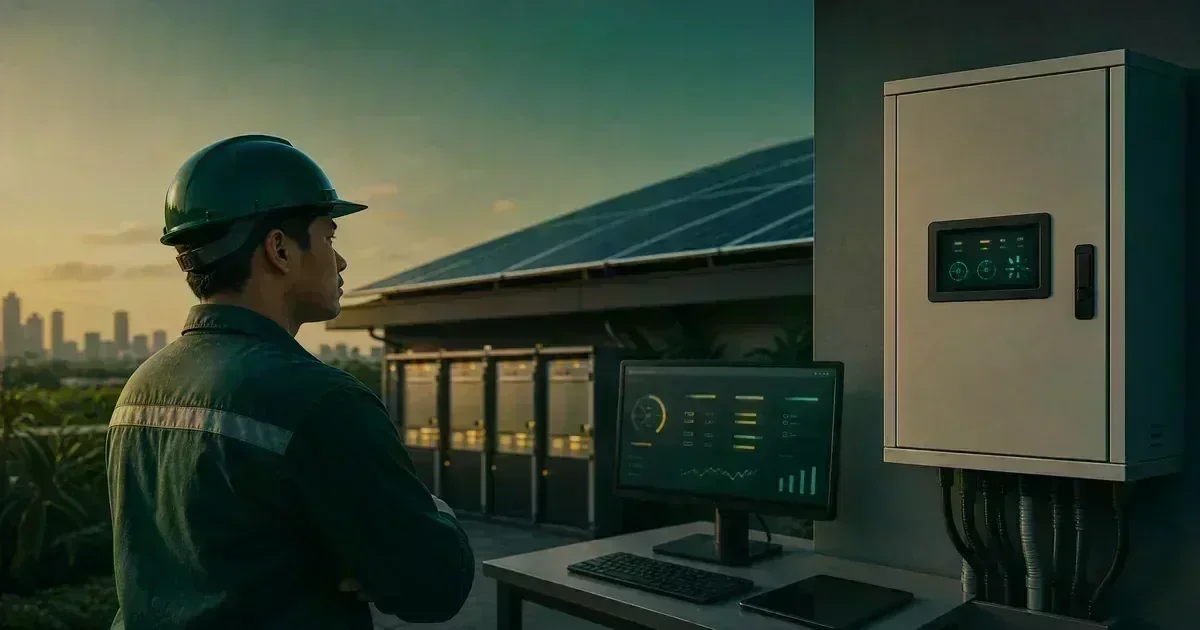
Use a structured observation log to diagnose solar fuse, breaker, inverter, and BMS trips without bypassing protection or repeatedly resetting a dangerous fault. For the next planning step, see typhoon-proof solar installation guide.
A trip is information
A fuse, breaker, inverter protection, or BMS event means the system detected a condition outside its allowed operation or that a protection component itself may be faulty. The correct response is to identify the trigger, not to make the trip disappear. For the next planning step, see solar wiring architecture guide. For a personalized system check, use the CalcSolarPH solar calculator.
Build a trip timeline
Record which device operated, the exact time, load or charging condition, battery state, weather, inverter code, recent changes, and whether the event repeats at the same stage. This can distinguish overload, startup surge, low-voltage behavior, temperature, communication loss, ground fault, short circuit, and component failure. For the next planning step, see solar cable sizing and voltage-drop guide.
Look for non-invasive patterns
Compare the event with appliance startup, high solar production, rain, heat, battery state, and monitoring data. Check only visible labels and approved user-interface information. Do not remove covers, replace a protective device with a larger one, hold a breaker closed, bridge terminals, or repeatedly reset a BMS lockout. For the next planning step, see solar backfeed and transfer-switch safety guide.
Ask for coordinated verification
The technician should compare the protective-device rating with conductor ampacity, equipment limits, fault current, interrupt rating, and the design. Request the reason for the trip, test result, corrective action, and confirmation that the protection was not defeated.
Know the escalation threshold
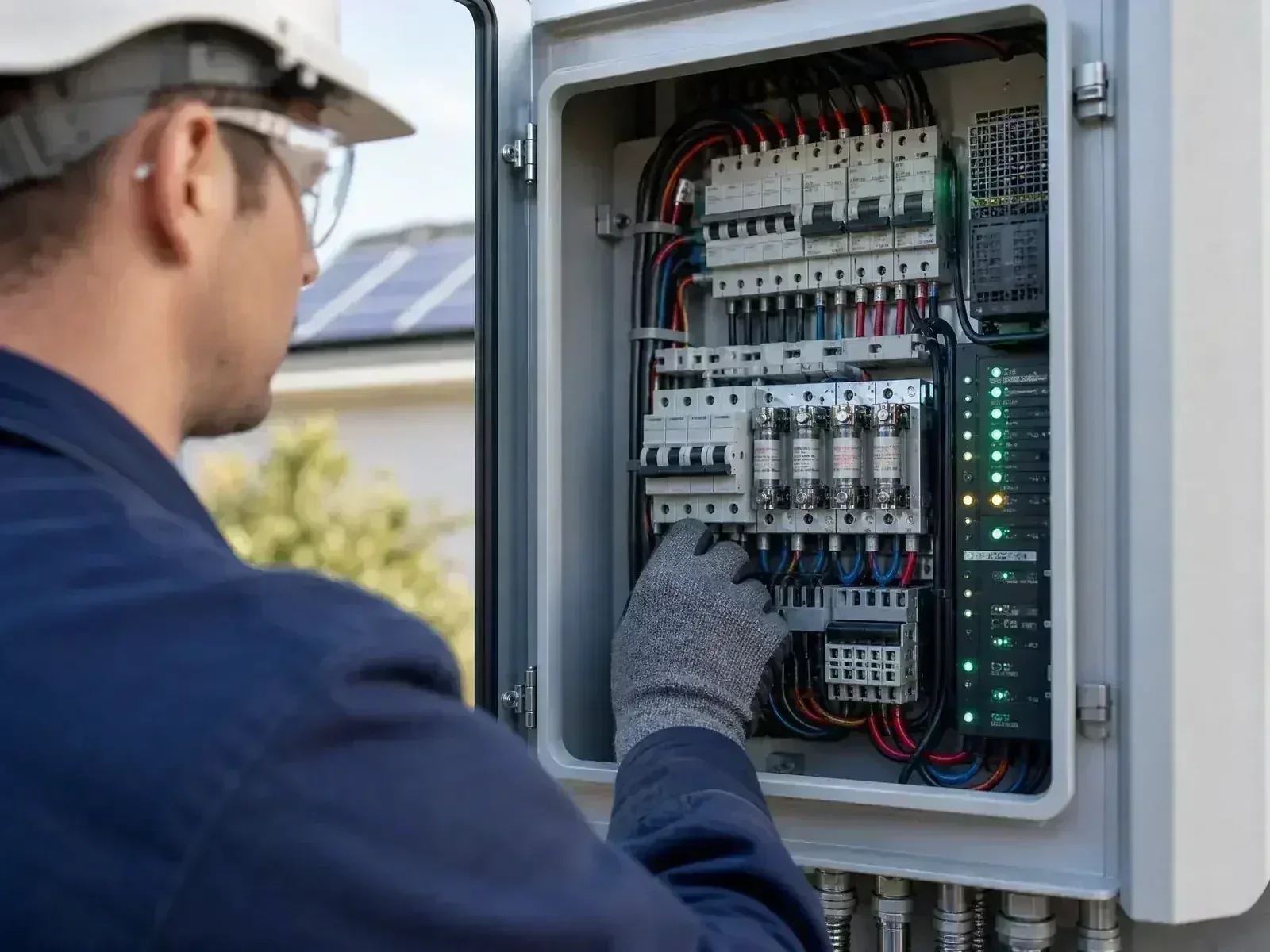
Escalate immediately for smoke, arcing, burning smell, melted parts, water intrusion, swelling, exposed conductor, repeated trips, or a trip that occurs with no obvious load. Leave the system in the safest state described by the manufacturer and do not improvise isolation.
Use a structured service handoff
Record the symptom, time, operating state, recent changes, safe photographs, model numbers, alarm codes, and questions. A qualified technician can then select the correct instruments and isolation method instead of relying on guesswork.
Frequently Asked Questions
Should I install a larger breaker if the current one keeps tripping?
No. A larger device can remove protection from a conductor or equipment. Find the cause with a qualified professional.
Why can a BMS trip happen when the battery is not empty?
Trips can be caused by current, temperature, cell imbalance, communication, voltage limits, or a battery fault, not only low state of charge.
What makes a good fault report?
Device name, code, timestamp, load, battery state, weather, recent changes, photos from a safe location, and whether the event repeated.
For a first estimate, use the CalcSolarPH solar calculator, then review the solar products catalog and consult a qualified professional for energized testing or final electrical work.
Philippine Homeowner Evidence and Professional Handoff
Repeated trips are information, not an inconvenience to defeat. Record which device trips, the approximate load or weather condition, the inverter screen message, and whether the event repeats after a manufacturer-approved reset. A qualified person must determine whether the cause is overload, short circuit, temperature, insulation, battery communication, or equipment failure before any protection is changed.
| DIY-safe record | Do not infer from it | Qualified-person follow-up |
|---|---|---|
| Model, serial, alarm, date, weather, load condition | That the conductor or battery is safe to touch | Select instruments, isolation method, PPE, and test sequence |
| Photos from a safe distance and manufacturer limits | That a reset solved the root cause | Verify protection, connections, grounding, and equipment condition |
| Utility/installer documents and one-line diagram | That grid operation is approved | Complete required inspection, commissioning, and handoff |