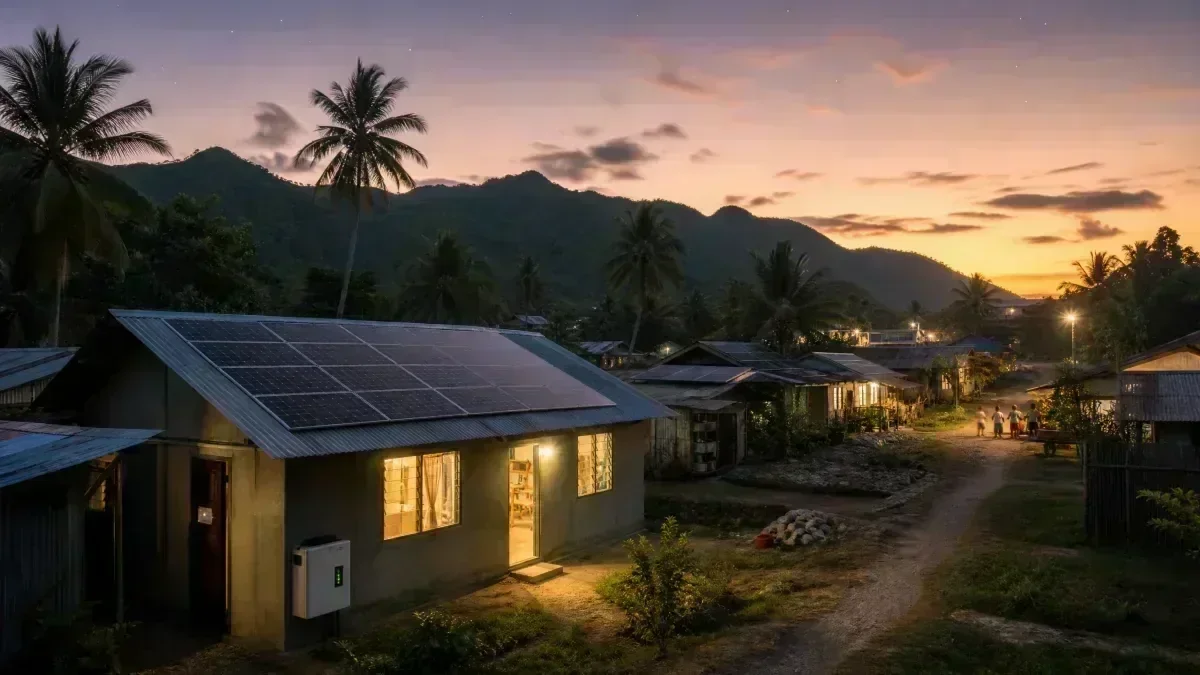
Agriculture accounts for over 20% of the Philippines' electricity consumption, yet many farms and agricultural operations still struggle with unreliable power supply, high electricity costs, or complete lack of grid access. Solar energy offers a transformative solution, from powering irrigation pumps and rice mills to running poultry ventilation systems and cold storage for harvest preservation. For the next planning step, see how much solar power your home actually needs.
This page covers the most common agricultural solar applications in the Philippines, with real cost data, system sizing recommendations, and return-on-investment calculations for 2026.
Solar-Powered Irrigation: The #1 Farm Application
Water pumps are the largest electricity consumers on most Philippine farms. A typical shallow-well pump draws 750W–1,500W and runs 4–8 hours daily during dry season. For farms without grid access, a solar water pump system eliminates fuel costs and provides reliable water supply regardless of brownouts. For the next planning step, see essential-loads backup guide.
| Pump Type | Power | Solar Array Needed | Approx. Cost |
|---|---|---|---|
| Submersible (shallow well, 30m) | 750W | 1.5kW (3× 500W panels) | ₱45,000–₱65,000 |
| Submersible (deep well, 60m) | 1,500W | 3kW (6× 500W panels) | ₱85,000–₱120,000 |
| Surface pump (river/canal) | 1,000W | 2kW (4× 500W panels) | ₱55,000–₱80,000 |
| Drip irrigation booster | 500W | 1kW (2× 500W panels) | ₱30,000–₱45,000 |
Solar water pumps work best between 9 AM and 3 PM when solar output peaks, which conveniently aligns with optimal irrigation timing. No battery storage is needed for pump-only systems, which significantly reduces cost. The pump simply runs when the sun shines and stops at night.
Solar for Rice Mills and Post-Harvest Processing
Rice milling is energy-intensive: a single-pass mill draws 7.5–15 kW depending on capacity. For small-scale mills (1–2 tons/hour), a solar-hybrid system can handle peak operations during daylight hours: For the next planning step, see off-grid vs hybrid vs grid-tied guide.
| Mill Capacity | Power Draw | Recommended Solar | System Cost |
|---|---|---|---|
| Small (1 ton/hr) | 7.5 kW | 10kW solar + 10kWh battery | ₱450,000–₱550,000 |
| Medium (2 ton/hr) | 15 kW | 20kW solar + 20kWh battery | ₱800,000–₱1,000,000 |
| Grain dryer (500 kg/batch) | 5 kW | 8kW solar (no battery) | ₱300,000–₱380,000 |
For rice mills in areas with grid access, a hybrid solar system with net metering is ideal. Excess solar power during milling operations can be exported to the grid for bill credits. Learn more about net metering in our complete net metering guide.
Solar for Poultry and Livestock Operations
Poultry farms have unique power requirements: ventilation fans run 24/7, brooders need consistent heat, and automated feeding systems require reliable electricity. A power interruption of even 30 minutes in summer can cause significant bird mortality.
| Load | Wattage | Hours/Day | Daily kWh |
|---|---|---|---|
| Ventilation fans (4× 100W) | 400W | 24 hrs | 9.6 kWh |
| Brooder heaters (2× 250W) | 500W | 12 hrs | 6.0 kWh |
| Automated feeder/waterer | 100W | 24 hrs | 2.4 kWh |
| LED lighting | 50W | 16 hrs | 0.8 kWh |
| Total | ~18.8 kWh/day |
A poultry operation consuming ~19 kWh/day needs a 15–20 kW solar system with at least 20kWh of battery storage for nighttime ventilation. This is a significant investment (₱700,000–₱900,000) but pays for itself through avoided bird mortality and eliminated generator fuel costs within 4–5 years.
Solar Cold Storage for Harvest Preservation
Post-harvest losses in the Philippines reach 15–30% for fruits and vegetables due to lack of cold storage. Solar-powered cold rooms are emerging as a game-changer for farm cooperatives:
- Small cold room (5–10 m³): 3kW solar + 10kWh battery, maintains 4–8°C. Cost: ₱250,000–₱350,000. Suitable for vegetable traders and small cooperatives.
- Medium cold room (15–30 m³): 8kW solar + 20kWh battery. Cost: ₱500,000–₱700,000. Suitable for rice traders and fruit exporters.
- Cold room rental model: Some cooperatives install shared cold storage and charge ₱5–₱10/kg/day for storage, generating income while reducing member losses.
Solar cold storage is particularly valuable for high-value crops like strawberries, lettuce, tomatoes, and mangoes where freshness directly determines market price.
ROI Analysis: Solar vs Generator for Farm Operations
Let's compare the real costs for a typical farm using a 5kW generator for irrigation and processing:
| Cost Factor | Generator (5kW) | Solar (5kW off-grid) |
|---|---|---|
| Setup Cost | ₱30,000–₱50,000 | ₱280,000–₱450,000 |
| Fuel (₱60/liter, 4 hrs/day) | ₱7,200/month | ₱0 |
| Annual Fuel | ₱86,400 | ₱0 |
| Maintenance | ₱12,000/year | ₱5,000/year |
| 5-Year Operating Cost | ₱492,000 | ₱25,000 |
| Break-even Point | — | 3.5–4.5 years |
For farms that operate pumps and equipment 4+ hours daily, solar pays for itself faster than residential installations because the daily energy consumption is higher. The more you use it, the faster the ROI.
Government Programs and Subsidies for Agricultural Solar
Several Philippine government programs support solar adoption in agriculture:
- DA Solar Power Program: The Department of Agriculture has allocated funds for solar-powered irrigation systems in priority agricultural areas. Check with your provincial agriculture office for eligibility.
- DAREC (Department of Agrarian Reform Energy Program): Provides solar systems to agrarian reform beneficiaries in off-grid areas.
- NEA Rural Electrification: The National Electrification Administration supports solar mini-grids in unserved barangays.
- LGU Renewable Energy Ordinances: Some provinces (e.g., Ilocos Norte, Negros Occidental) offer tax incentives for agricultural solar installations.
Contact your provincial agriculture office or the nearest DA regional office to check if your farm qualifies for subsidized solar equipment.
Equipment Recommendations for Agricultural Use
Agricultural solar systems face harsher conditions than residential setups: dust, vibration, extreme heat, and moisture. Here's what holds up:
- Panels: Choose double-glass or framed modules with high salt-mist resistance (IEC 61701 certified) for coastal farms. Jinko and Trina offer agricultural-grade options.
- Inverters: Deye hybrid inverters handle motor starting surges (pumps draw 3–5× rated current at startup). Ensure your inverter has adequate surge capacity.
- Mounting: Use hot-dip galvanized steel for farm installations. Aluminum corrodes faster in humid, dusty environments.
- Batteries: LiFePO4 with IP65-rated enclosures for outdoor installation. Keep batteries elevated and covered.
Browse vetted agricultural solar equipment in our recommended hardware catalog, filtered for farm-grade durability.
DIY vs Professional Installation for Farms
For simple solar water pump systems (1–2 kW), experienced DIYers with electrical knowledge can handle installation safely. However, for systems above 5 kW, especially those powering mills, cold storage, or poultry operations, professional installation is strongly recommended due to: For the next planning step, see solar-ready home planning guide.
- Higher DC voltages (up to 600V) that are lethal without proper precautions
- Motor starting currents that require proper cable sizing and protection
- Three-phase power requirements for larger mills
- Warranty requirements from equipment manufacturers
Our off-grid solar setup guide covers DIY installation steps for smaller systems, and our wiring diagram guide provides detailed connection instructions.
Planning Your Farm Solar System
Follow this sequence to plan an effective agricultural solar installation:
- Inventory your loads: List every piece of equipment, its wattage, and daily operating hours. Include surge/starting currents for motors.
- Calculate daily kWh: Total energy needed per day, plus 20% safety margin.
- Choose system type: Off-grid for remote farms, hybrid with net metering for grid-connected operations.
- Size the battery: For 24/7 loads (ventilation, cold storage), size for 1.5–2 days autonomy.
- Check government programs: DA, DAREC, and NEA may subsidize part of your system.
- Get permits: Electrical permit from LGU; building permit if constructing a new structure.
- Order and install: Use farm-grade components rated for harsh conditions.
Use our free solar calculator to estimate your system size based on your farm's total load profile.
Frequently Asked Questions
Can solar power a submersible pump directly without batteries?
Yes. Solar water pump systems with VFD (variable frequency drive) controllers can run pumps directly from solar panels during daylight. No battery is needed; the pump simply slows down or stops when clouds pass or at night.
How much land area do I need for solar panels on my farm?
Approximately 1.5–2 m² per 300W panel. A 5kW system (10 panels) needs about 15–20 m², roughly 4m × 5m of roof or ground space. Ground-mounted systems work well on unused farm corners.
Is solar worth it for a small rice farm (1–2 hectares)?
Yes, especially for irrigation. A 3kW solar pump system (₱120,000–₱150,000) eliminates ₱5,000–₱8,000/month in diesel costs during the dry season, paying for itself in 2–3 years.
Can I use net metering for my farm if it's connected to the grid?
Yes. Farms connected to electric cooperatives can apply for net metering under the same rules as residential users. The 100 kW cap (soon to be 1MW under proposed ERC amendments) is more than sufficient for most agricultural operations.
What happens to solar panels during typhoon season?
Quality panels are rated for 2,400 Pa wind load (equivalent to Category 4 typhoon winds). Properly mounted panels with adequate bracing survive typhoons. The main risk is debris impact, so keep surrounding trees trimmed and remove loose objects before storms.
Want to size your own system? Use the free solar calculator to estimate your panel, inverter, and battery needs from your monthly bill.
Sources & Further Reading
Use these references to verify technical context, current utility procedures, and safety or planning information. Rules, tariffs, product specifications, and availability can change, so check the source’s current publication date before making a purchase or installation decision.