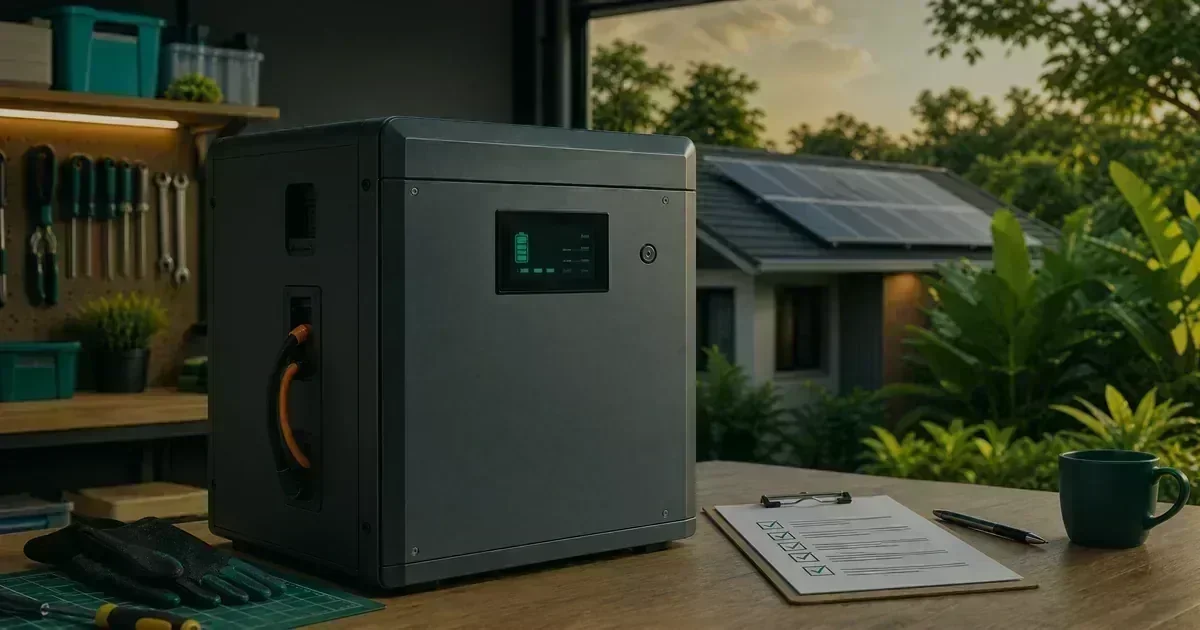
A practical emergency-response guide for solar battery swelling, leakage, overheating, smoke, and BMS alarms, with clear stop-work and professional-handoff steps. For the next planning step, see LiFePO4 vs lead-acid battery comparison.
Treat abnormal battery behavior as a stop signal
Swelling, leakage, smoke, hissing, burning smell, unusual heat, visible damage, or repeated high-temperature protection are not normal maintenance issues. Do not open, puncture, press, move unnecessarily, or continue charging a battery that shows these signs. For the next planning step, see solar battery runtime guide. For a personalized system check, use the CalcSolarPH solar calculator.
Protect people first
Keep people away, prevent ignition sources, and follow the manufacturer’s emergency instructions and local emergency guidance. Do not place yourself between the battery and an exit. If the condition is escalating, leave the area and contact emergency services or a qualified service provider. For the next planning step, see essential-loads backup guide.
Do not reset the symptom away
A BMS alarm is a protective signal. Repeatedly resetting alarms, changing charge limits blindly, bypassing a contactor, or forcing a battery back online can remove protection while the underlying condition remains. Record the code and the time instead. For the next planning step, see LiFePO4 battery buying guide.
Safe documentation
From a safe location, note the smell, sound, visible condition, temperature indication, alarm code, recent weather, recent configuration change, and whether charging or discharging was occurring. Use photographs only if doing so does not bring you closer to danger.
Professional handoff and disposal
A qualified service provider should determine isolation, transport, inspection, replacement, and disposal requirements. Do not place a damaged battery in ordinary household waste, leave it in a vehicle, or mix it with undamaged stock.
Use a structured service handoff
Record the symptom, time, operating state, recent changes, safe photographs, model numbers, alarm codes, and questions. A qualified technician can then select the correct instruments and isolation method instead of relying on guesswork.
Frequently Asked Questions
Is a swollen battery safe if it still works?
No. Swelling is an abnormal condition that requires service assessment. Do not continue normal operation just because the display still works.
Can I open the battery case to inspect it?
Do not open a sealed battery enclosure as a DIY diagnostic step. Contact the manufacturer or qualified service provider.
What if the battery is hot but not smoking?
Treat unexpected heat as a warning, keep people away, avoid further interaction, and follow the manufacturer’s emergency guidance.
For a first estimate, use the CalcSolarPH solar calculator, then review the solar products catalog and consult a qualified professional for energized testing or final electrical work.
Philippine Homeowner Evidence and Professional Handoff
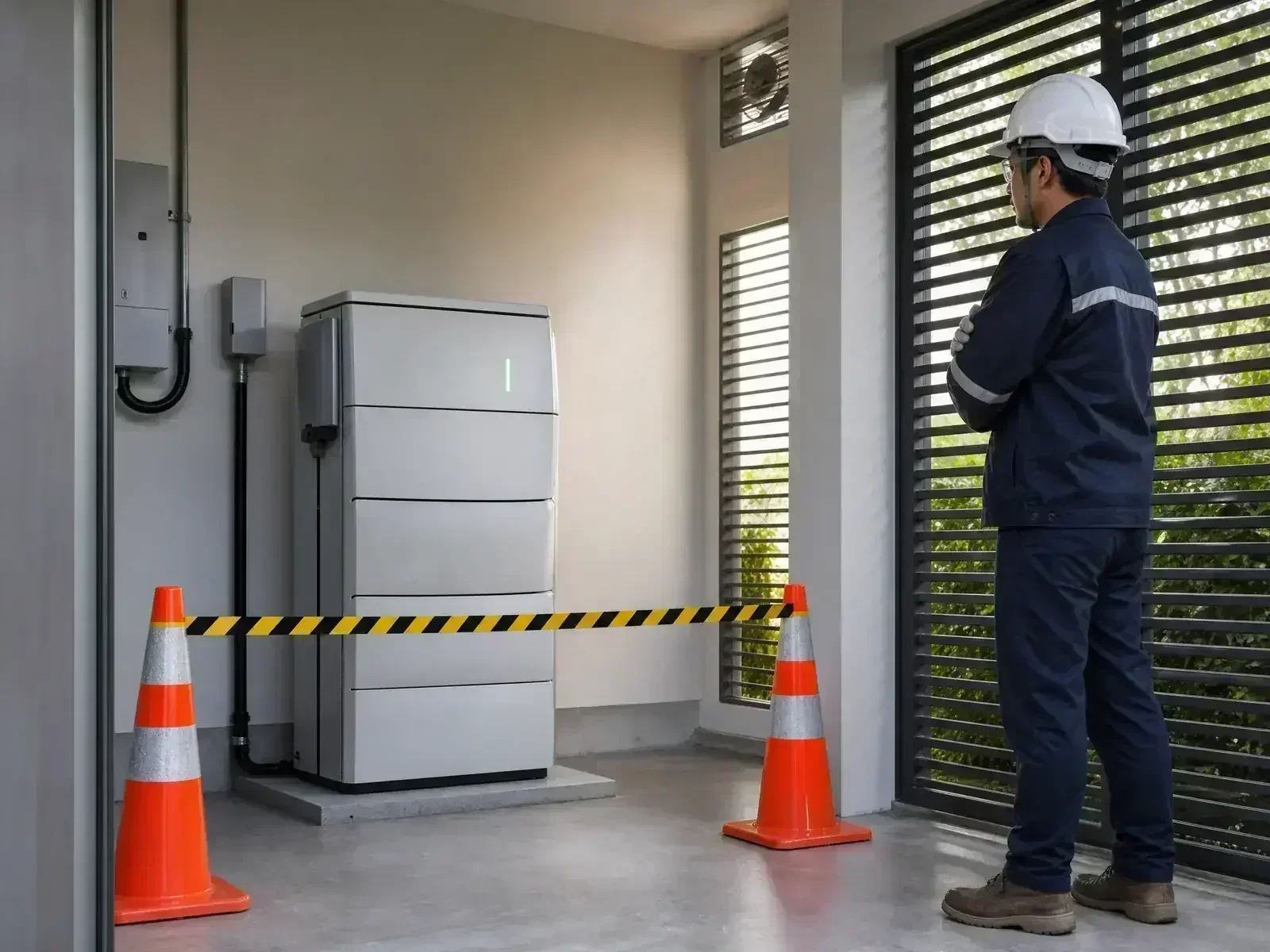
In a hot and humid Philippine environment, swelling, leakage, unusual odor, heat, corrosion, or repeated BMS alarms should be treated as a stop-work condition. Do not move, open, charge, cool with water, or reconnect a suspect pack unless emergency responders or the manufacturer provide an appropriate procedure. Record the chemistry, model, location, symptoms, and time, then keep people away.
| DIY-safe record | Do not infer from it | Qualified-person follow-up |
|---|---|---|
| Model, serial, alarm, date, weather, load condition | That the conductor or battery is safe to touch | Select instruments, isolation method, PPE, and test sequence |
| Photos from a safe distance and manufacturer limits | That a reset solved the root cause | Verify protection, connections, grounding, and equipment condition |
| Utility/installer documents and one-line diagram | That grid operation is approved | Complete required inspection, commissioning, and handoff |