What Happened?
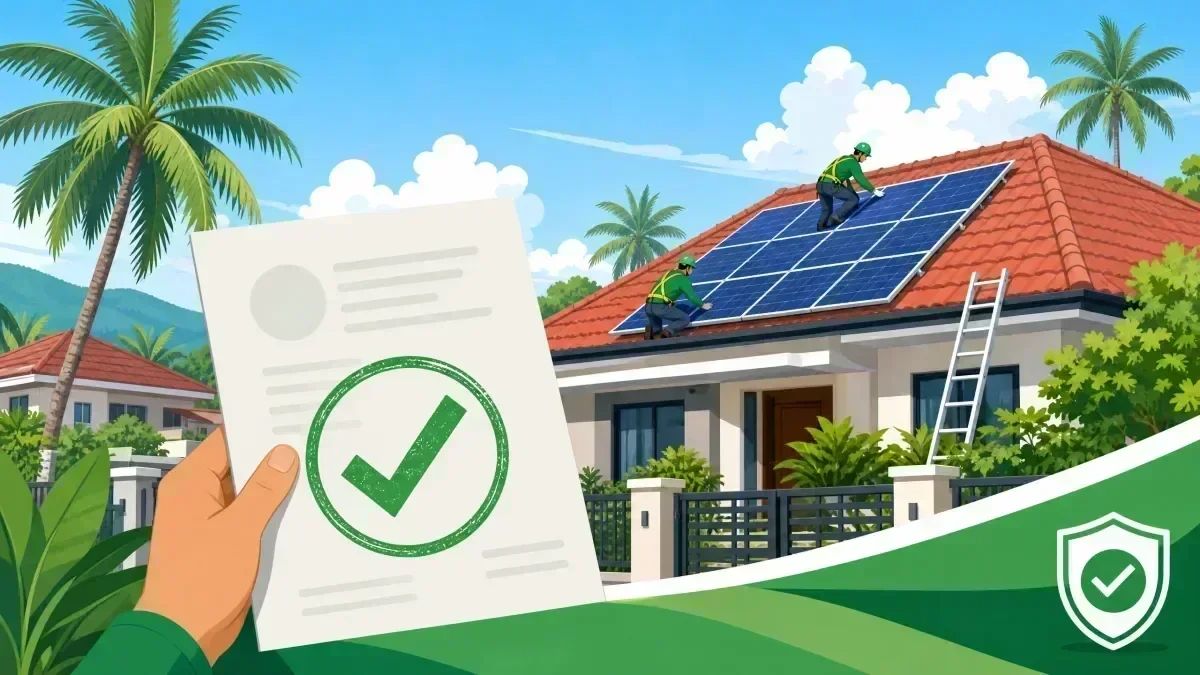
The Department of Energy (DOE) announced on August 20, 2026 that it is removing bureaucratic barriers for homeowners who want to install rooftop solar panels and battery storage systems. This policy shift aims to accelerate the adoption of clean energy among Filipino households and make solar power more accessible to the average consumer. For the next planning step, see 2026 net metering update.
The Sariling Kuryente Act
President Ferdinand Marcos Jr. pushed for the passage of the Sariling Kuryente Act during his fifth State of the Nation Address (SONA 2026). House Bill No. 10431, filed by House Speaker Faustino Dy III and Majority Leader Sandro Marcos, reclassifies personal rooftop solar and battery systems as "behind-the-meter" household energy use rather than commercial power generation.
The bill seeks to:
- Remove ERC permit requirements for non-exporting solar systems
- Ban utilities from imposing extra technical studies and fees on homeowners
- Prevent Homeowners' Associations from blocking solar installations
- Mandate a 10-working-day approval timeline for net metering applications
- Prohibit HOAs from banning rooftop solar on privately owned property
What the DOE Circular Removes
Under the new DOE guidelines, the following requirements are no longer needed for micro-solar systems (MSS): For the next planning step, see Philippine net metering guide.
- Building permits from local government units
- Certificate of Compliance (COC) from the Energy Regulatory Commission
- Pre-installation clearances from distribution utilities
- Technical impact studies and inspection fees
Who Benefits?
The policy covers three types of systems:
- Self-Generating Facilities (SGFs): solar setups that power your home without exporting to the grid
- Micro-Solar Systems (MSS): small-scale installations for households
- Zero-Export Energy Systems (ZESS): systems designed to never feed power back into the grid
Safety Requirements Still Apply
Even with simplified permits, safety standards remain:
- Anti-islanding protection: all MSS must have automatic disconnection during power outages to protect utility workers
- Certified equipment: only BPS-certified products from DTI-approved manufacturers
- Proper installation: systems must meet technical standards set by the ERC
What This Means for You
If you've been waiting to go solar because of permit hassles, bureaucratic delays, or fear of HOA restrictions, this is the time to act. The government is actively removing barriers and encouraging households to adopt renewable energy. The DOE's goal is to reach 35% renewable energy in the national power mix by 2030, and residential solar is a key part of that strategy.
How to Get Started
Use our free solar calculator to determine the right system size based on your monthly consumption. Read our guide on off-grid vs hybrid vs grid-tied to pick the best setup for your needs. For step-by-step preparation, check our DIY solar planning guide. Our Solar Planning Hub also has safety decision trees and readiness checklists.
Sources
Source: ABS-CBN News: Energy dept cuts red tape for rooftop solar to drive home clean energy (August 20, 2026)
What homeowners should verify before changing a solar plan
Policy headlines can change how a project is processed, but they do not remove the need for a properly engineered system. Before signing a quotation, check the distribution utility's current requirements, the electrical design, equipment certifications, protection devices, and the installer or professional's responsibility for the work.
- Confirm whether your project is grid-tied, hybrid, or off-grid; the equipment and utility requirements are different.
- Ask which portions of the quotation cover permitting, utility coordination, testing, commissioning, and documentation.
- Keep the final single-line diagram, equipment model numbers, serial numbers, warranties, and test records with the system documents.
- Do not interpret a faster administrative process as permission to skip electrical safety or utility interconnection requirements.
Because regulatory details can change, CalcSolarPH treats policy articles as living documents: verify the current rule or utility procedure before acting on a time-sensitive requirement.
Frequently Asked Questions
Does the DOE circular remove the need for an electrician or installer?
No. It removes specific permit and clearance steps for qualifying micro-solar systems, but certified equipment, anti-islanding protection, and proper installation to ERC technical standards are still required.
Do these changes apply if I plan to export excess power to the grid?
The simplified process described here applies to non-exporting systems such as Self-Generating Facilities, Micro-Solar Systems, and Zero-Export Energy Systems. Systems that export power still go through net metering interconnection requirements.
Can my HOA still block my rooftop solar installation?
The Sariling Kuryente Act seeks to prevent Homeowners' Associations from banning rooftop solar on privately owned property, but confirm the current, finalized rules and your specific HOA covenants before installing.