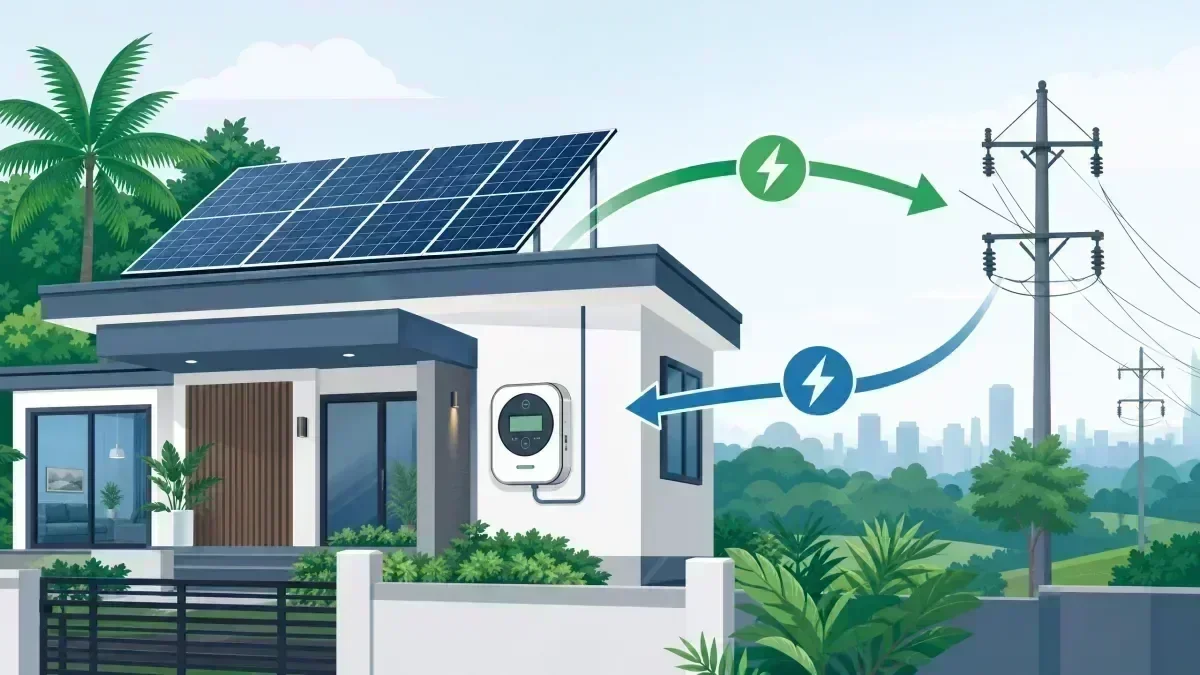
The Philippines' net metering rules are being reviewed in 2026, but homeowners should not confuse draft amendments with rules already in force. The ERC has published a notice on a draft amendment to the Net Metering Rules, including proposed changes for larger non-residential systems. The safest approach is to size and contract a system against the rules currently applicable to your distribution utility, then verify any proposed change directly with the ERC or utility before relying on it.
Net Metering Philippines 2026: Separate Rules From Proposals
Net metering is a high-intent topic, but the dangerous mistake is treating a proposal, regulator action and utility procedure as the same thing. This article should clearly distinguish rules already in force from proposed or pending changes.
Before applying, verify the current requirements with the applicable distribution utility and regulator: interconnection documents, meter requirements, system limits, inspection, approval and treatment of exported energy. Do not size a system around a proposed rule until the applicable authority confirms it.
The homeowner question is not only “Can I net meter?” It is “How much solar will I consume on-site, how much may be exported, and what value will that export receive?”
What Changed in 2026?
Several developments converged in the first half of 2026 to reshape how net metering works in the Philippines. The table below separates changes that are currently documented from changes that remain proposed:
| Change | Before | After (2026) |
|---|---|---|
| Capacity cap (non-residential) | 100 kW under RA 9513 | Proposed in ERC draft; not a blanket replacement of the current 100 kW Meralco residential limit |
| Net metering application approval | Up to 20 working days | Check current utility implementation; do not assume a draft rule is final |
| ERC Net Metering Rules | Last amended 2017 | Draft amendments published (ERC Case No. 2026-014 RM) |
| Net metering application fee | P7,000 (some utilities) | Reduced to ~P600 at some utilities |
| Meralco residential rate (July 2026) | P12.95/kWh (January 2026) | P14.80/kWh |
The 1 MW Cap: What It Means
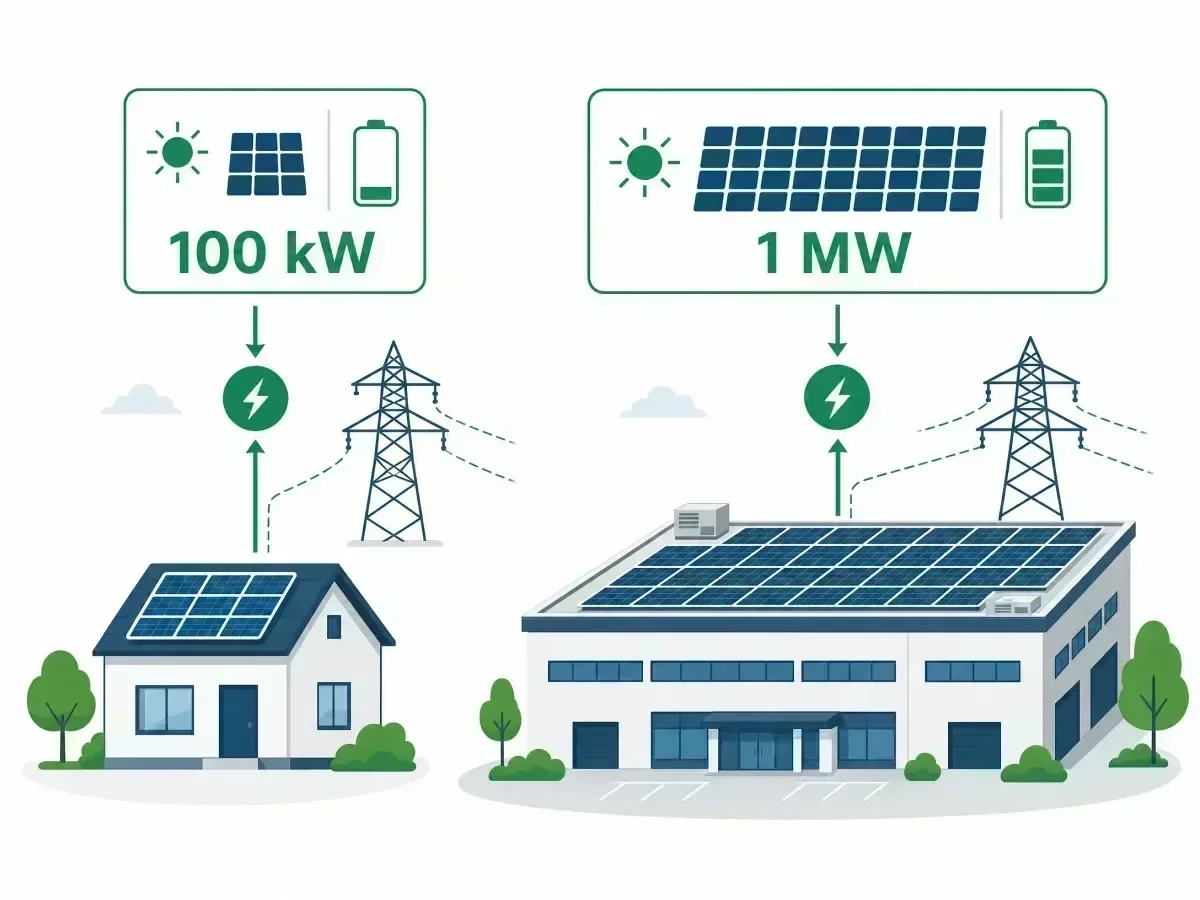
Under the Renewable Energy Act of 2008 (RA 9513), the net metering cap has been 100 kW per meter, enough for most homes but far too small for larger commercial buildings, factories, and multi-building campuses. Industry analysts from Mordor Intelligence report that the cap is being raised to 1 MW, opening the door for commercial and industrial (C&I) facilities to participate in net metering for the first time at meaningful scale. For the next planning step, see off-grid vs hybrid vs grid-tied guide.
The ERC has been drafting amendments to its Net Metering Rules under ERC Case No. 2026-014 RM. On July 21, 2026, the ERC issued OCM 36-2026, which includes draft rules covering charges to be implemented by distribution utilities under the amended net metering framework. The stated goals include improving interconnection setup to accommodate new technologies and supporting larger distributed energy resource (DER) installations.
Faster Approvals Under the Sariling Kuryente Act
Do not quote a faster approval timeline as a universal promise unless your distribution utility confirms that the applicable law and implementing procedure are already in force for your application. Utility processing can still depend on document completeness, technical review, inspection, meter work and site conditions.
The DOE has also been streamlining requirements in parallel. Micro-solar systems that do not export to the grid no longer require building permits, ERC certificates, or utility pre-approvals, a change that complements the net metering reforms by removing barriers at the smaller end of the spectrum. See our companion article on DOE cuts red tape for rooftop solar for details on non-exporting systems.
Net Metering Growth in Numbers
The scale of net metering adoption in the Philippines is growing rapidly. As of the first quarter of 2026, there are 22,495 qualified net metering end-users nationwide with a combined installed capacity of 219 MW. The DOE targets 35% renewable energy in the national power mix by 2030 and 50% by 2050, and net metering is a core mechanism for reaching those goals.
Mordor Intelligence forecasts the Philippines will install 19.6 GW of solar PV capacity by 2030, with the residential segment growing at the fastest rate, driven by elevated retail electricity prices that make self-generation increasingly attractive.
Higher Electricity Rates Make Net Metering More Valuable
Electricity rates change monthly. Do not use an old Meralco rate as a permanent solar-payback assumption. The value of self-consumed solar depends on the current retail rate, while exported energy is credited under the applicable net-metering methodology. Even the credit you receive for exported energy becomes more meaningful when retail rates are this high.
| Scenario | Monthly bill at P12.95/kWh | Monthly bill at P14.80/kWh | Difference |
|---|---|---|---|
| 500 kWh consumption | P6,475 | P7,400 | +P925/month |
| 1,000 kWh consumption | P12,950 | P14,800 | +P1,850/month |
| 2,000 kWh consumption | P25,900 | P29,600 | +P3,700/month |
At these rates, a typical residential solar system that offsets 70–80% of your grid consumption pays for itself faster than ever. Use our free solar calculator to estimate your specific savings based on your monthly bill.
What Still Applies in 2026
Regardless of proposed reforms, core requirements remain: proper technical design, utility interconnection approval where applicable, safe protection, inspection/testing and the appropriate metering arrangement. Safety standards, including anti-islanding protection to protect utility workers during outages, are non-negotiable. Equipment must be BPS-certified, and installation should follow ERC technical standards.
For Meralco customers, the current published net-metering information still states a 100 kW/100 kWp limit. Larger-system proposals should be treated separately and verified against the final ERC rules and the applicable distribution utility procedure.
How to Apply for Net Metering in 2026
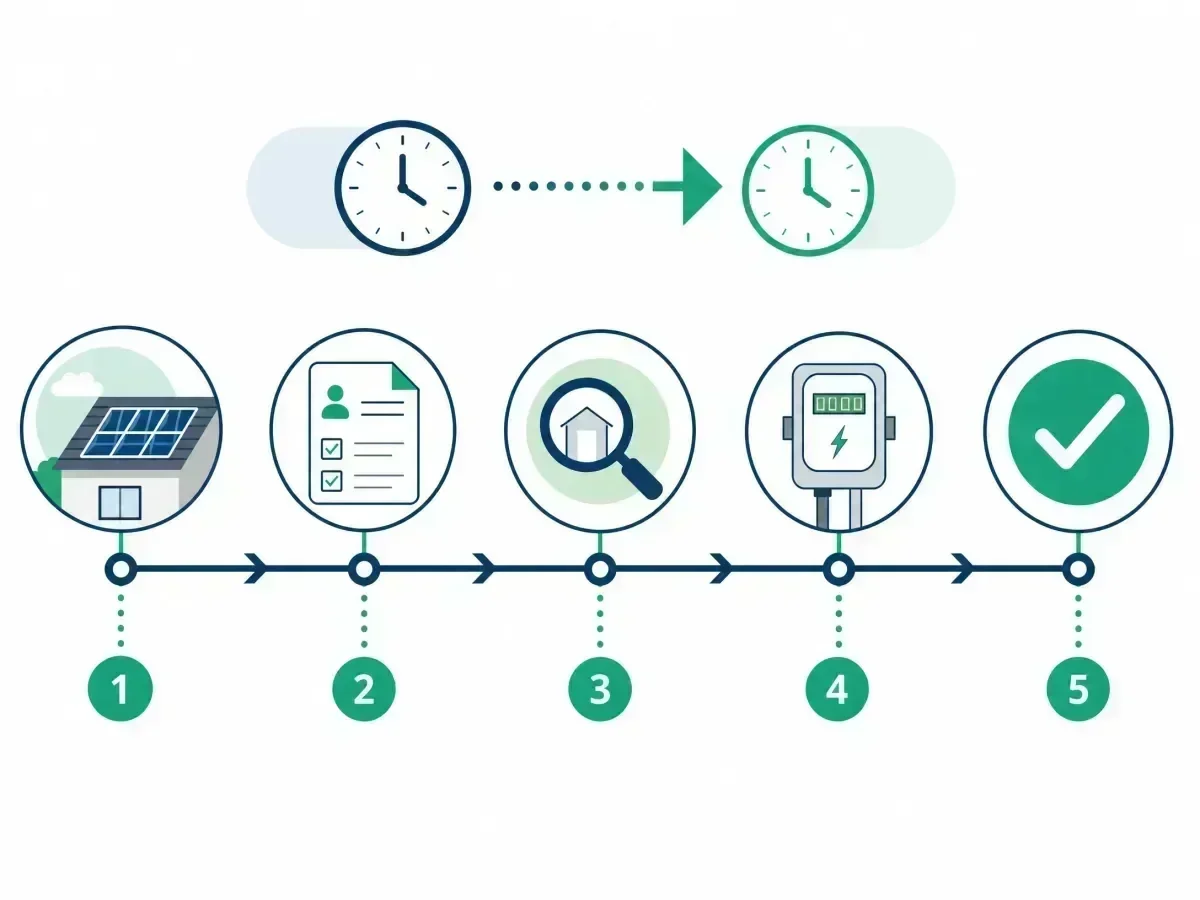
- Step 1: Size your system using our free calculator or the Solar Planning Hub, then verify the current system limit with your utility
- Step 2: Choose a PEE-certified installer who handles the bi-directional meter and utility paperwork
- Step 3: Submit your application to your distribution utility (Meralco for Metro Manila, your local electric cooperative for provincial areas)
- Step 4: Complete the utility review, inspection/testing and meter requirements that apply to your project
- Step 5: Pass inspection and commissioning, then your bi-directional meter is installed
- Step 6: Start earning bill credits for exported energy
Important: Separate Current Rules From Proposed Changes
Net-metering rules can change while a draft amendment is still under consultation. As of this guide's current review, the ERC has published a notice covering a draft amendment to the amended net-metering rules and a public-consultation process. Treat proposals as proposals until the Commission issues a final rule and your distribution utility updates its implementation requirements. See the ERC notice on the 2026 proposed amendment for the regulator's current status.
For Meralco customers, the utility currently states that its net-metering program is available for RE systems up to 100 kW/100 kWp, subject to its requirements. Meralco also states that exported energy is credited using the applicable ERC methodology rather than simply subtracting the full retail rate from the bill. See Meralco's current net-metering FAQ.
What This Means for a Homeowner
- Do not size a system around a proposed rule that has not taken effect.
- Confirm the current application requirements with your distribution utility before signing an installation contract.
- Do not assume one exported kWh is worth the same as one imported retail-rate kWh.
- If you want zero export rather than bill credits, ask about the utility's zero-export process and inverter configuration.
Meralco currently lists requirements including an application, Certificate of Final Electrical Inspection, signed Net-Metering Agreement and applicable fees; additional requirements can depend on the installation. Always verify the current checklist with Meralco before submitting an application.
Frequently Asked Questions
Is the 1 MW cap already in effect?
The ERC has published draft amendments to its Net Metering Rules that propose raising the cap to 1 MW for non-residential systems. Final implementation details are still pending; confirm the current cap directly with your distribution utility before sizing a system above 100 kW.
Does the 10-day approval apply to all utilities?
The Sariling Kuryente Act mandates the 10-working-day timeline for distribution utilities nationwide. However, implementation may vary by utility, so confirm with your provider.
Can I still apply for net metering under the 100 kW cap?
Yes. Residential systems up to 100 kW continue to qualify under RA 9513. The process is unchanged for this tier; you simply benefit from the faster 10-day approval timeline.
How does the higher Meralco rate affect my net metering credits?
Your export credits are based on the utility's approved net metering rate, which is typically lower than the retail rate. However, the value of every kWh you displace (self-consume instead of buying from the grid) is now worth P14.80/kWh, making self-consumption strategies like battery storage even more attractive.
Related Reading
New to net metering? Start with our complete net metering guide covering Meralco requirements, bill credits, and how net metering compares to battery storage. For the broader regulatory context, read our article on DOE's removal of red tape for rooftop solar and the solar permits and utility handoff guide.
Sources: ERC OCM 36-2026 (July 21, 2026); Mordor Intelligence: Philippines Solar Energy Market 2026–2031; Meralco Solar Net Metering; DOE public announcements (August 2026).