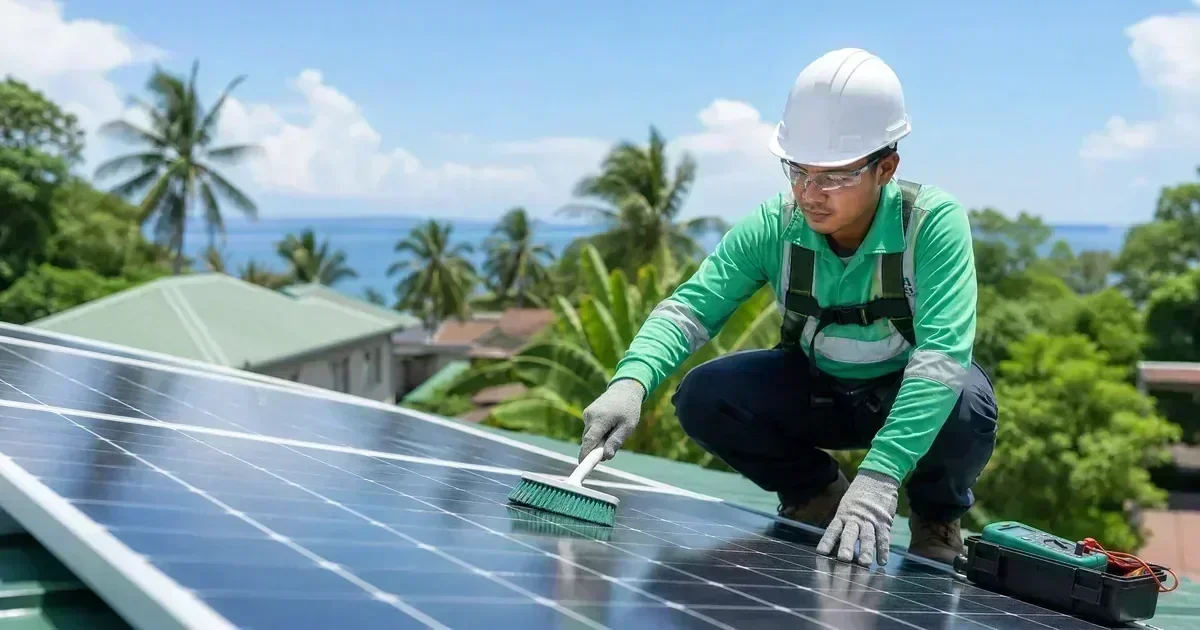
Solar panels generally require little maintenance, but that doesn't mean they can simply be installed and forgotten. Dust, dirt, bird droppings, shading, and other factors can gradually affect system performance. Here are some practical maintenance tips for homeowners in the Philippines. For the next planning step, see solar warranty records guide.
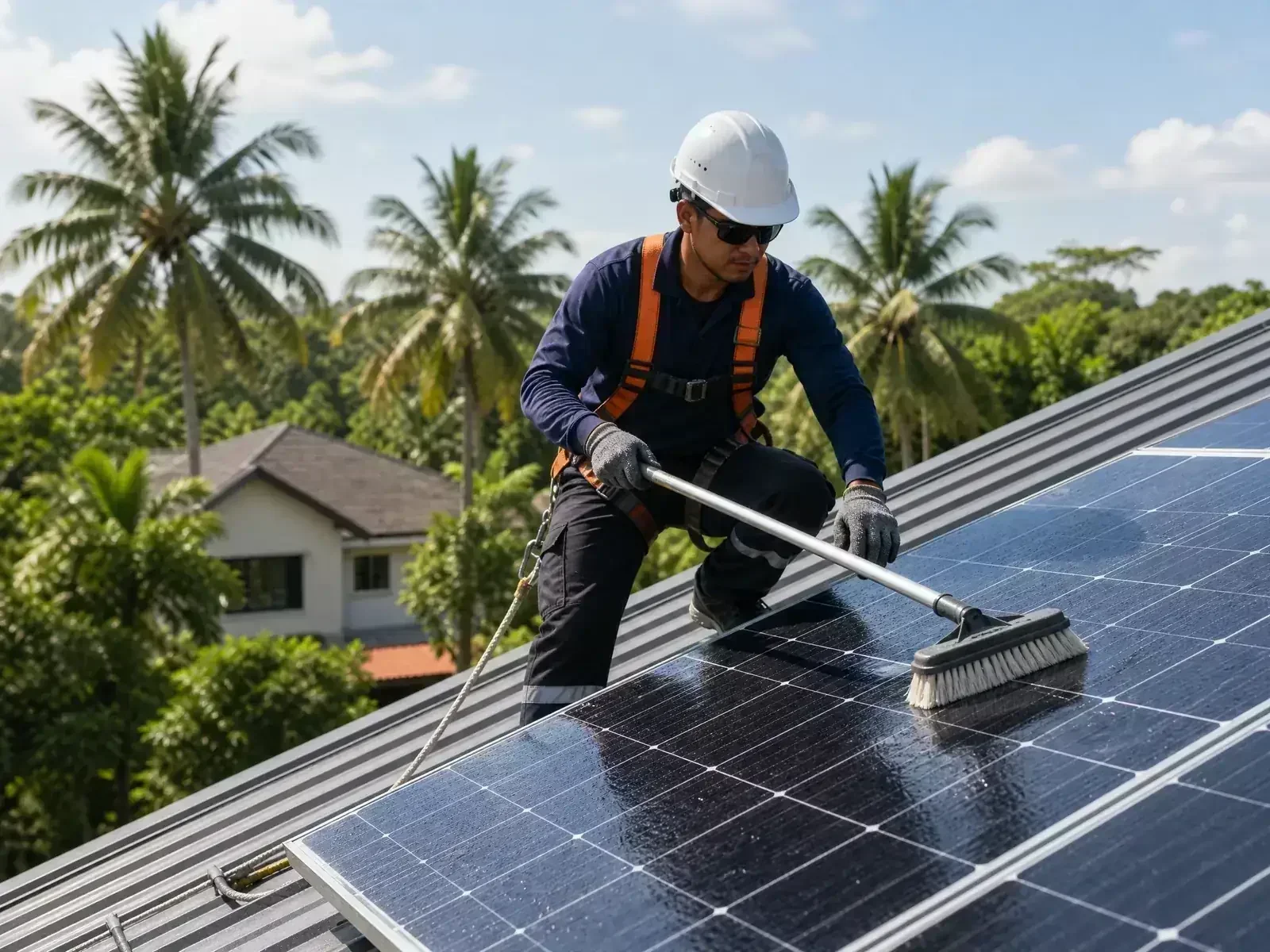
1. Keep the Solar Panels Clean
Dust, leaves, bird droppings, and other debris can reduce the amount of sunlight reaching the solar cells. In areas with frequent rain, panels may stay relatively clean, but occasional cleaning may still be necessary. Our solar panel cleaning guide covers the recommended 4–6 week schedule for Philippine conditions. For the next planning step, see solar panel cleaning and maintenance guide. For a personalized system check, use the CalcSolarPH solar calculator.
Use clean water and a soft brush or cloth when cleaning. Avoid abrasive materials that could scratch the panel surface.
2. Check for New Sources of Shading
A solar installation may perform well when first installed but produce less electricity later if nearby trees grow or new structures block sunlight. For the next planning step, see solar installation handover checklist.
Periodically check the roof and surrounding area for trees, branches, antennas, or other objects that may cast shadows on the panels, especially during the hours when sunlight is strongest.
3. Monitor Your Solar Production
One of the easiest ways to identify a potential problem is to monitor your system's daily energy production.
If your solar panels suddenly produce significantly less power under similar weather conditions, check for shading, dirt, inverter warnings, or other possible issues.
4. Inspect Cables and Connections
Solar systems operate outdoors and are exposed to heat, rain, and humidity. Periodically inspect visible cables, connectors, and other components for signs of damage, corrosion, loose connections, or unusual heating.
Electrical inspections should be performed by a qualified solar technician, especially when working with DC wiring and high-voltage solar arrays.
5. Check the Inverter and Protection Devices
The inverter is one of the most important components of a solar system. Check its display or monitoring application for error messages, abnormal temperatures, or unexpected shutdowns.
Protection devices such as breakers, fuses, surge protection devices, and disconnect switches should also be inspected to make sure they remain in good working condition.
6. Pay Attention to Changes in Performance
A gradual reduction in solar production can be normal as panels age, but a sudden drop should not be ignored.
Compare your current production with previous months while considering differences in weather and sunlight. Consistent unexplained drops may indicate a problem that requires professional inspection.
Final Thoughts
Regular solar panel maintenance doesn't have to be complicated. Keeping the panels reasonably clean, monitoring energy production, checking for shading, and inspecting the system regularly can help maintain reliable performance, and a well-maintained system stays on track toward the ROI and payback you originally calculated.
For electrical connections, inverter issues, and other technical work, it is always better to have a qualified solar professional perform the inspection rather than attempting repairs yourself.
A Tropical Solar Maintenance Schedule
A practical maintenance plan for a Philippine solar system should combine visual checks, performance monitoring, and professional inspection. After heavy rain or a typhoon, look for shifted modules, loose conduit, damaged cable clips, water entry, unusual inverter warnings, and debris. Do not climb onto a wet roof or touch damaged electrical equipment. Record the date, weather condition, inverter output, and any alarm so a technician can diagnose changes more efficiently. For the next planning step, see solar monitoring guide.
Monthly homeowner checks
Review the inverter or monitoring app for sudden production drops, repeated faults, abnormal temperatures, and unexplained shutdowns. Compare similar sunny days rather than expecting identical output every day. Check that vents are not blocked and that vegetation has not created new shade. A small output decline may be normal during cloudy weather, but a persistent unexplained drop deserves inspection.
Cleaning Without Damaging the Panels
Dust, salt air, bird droppings, and leaf debris can reduce production, but aggressive cleaning can damage glass, seals, or the person doing the work. Follow the panel manufacturer’s instructions and use a qualified service provider for difficult roofs. Avoid abrasive tools and harsh chemicals. Cleaning frequency should be based on the site, rainfall, dust, and measured production rather than a fixed rule for every home.
When to Call a Professional
Call a qualified technician for repeated inverter faults, hot spots, burning smells, damaged wiring, water intrusion, loose mounting hardware, battery swelling, or unexplained production loss. Maintenance is also a good time to check protective devices, grounding, cable routing, torque, and the condition of the roof penetrations.
Frequently Asked Questions
How often should solar panels be cleaned in the Philippines?
There is no universal interval. Inspect the site regularly and clean when dust, salt, bird droppings, or debris are visibly affecting the surface or measured production. Follow the manufacturer’s safety instructions.
Can I perform solar maintenance myself?
You can perform ground-level visual checks, but electrical testing, roof work, wiring, batteries, and protective devices should be handled by qualified personnel.